

Nothing here yet. Every maker starts somewhere.
Pick a starter kit with everything for your first cast, or let the beginner guides walk you through it.
Shop the starter kits Read the beginner guides
 By Sofie Demeyer
·
8 min read
Beginner
By Sofie Demeyer
·
8 min read
Beginner
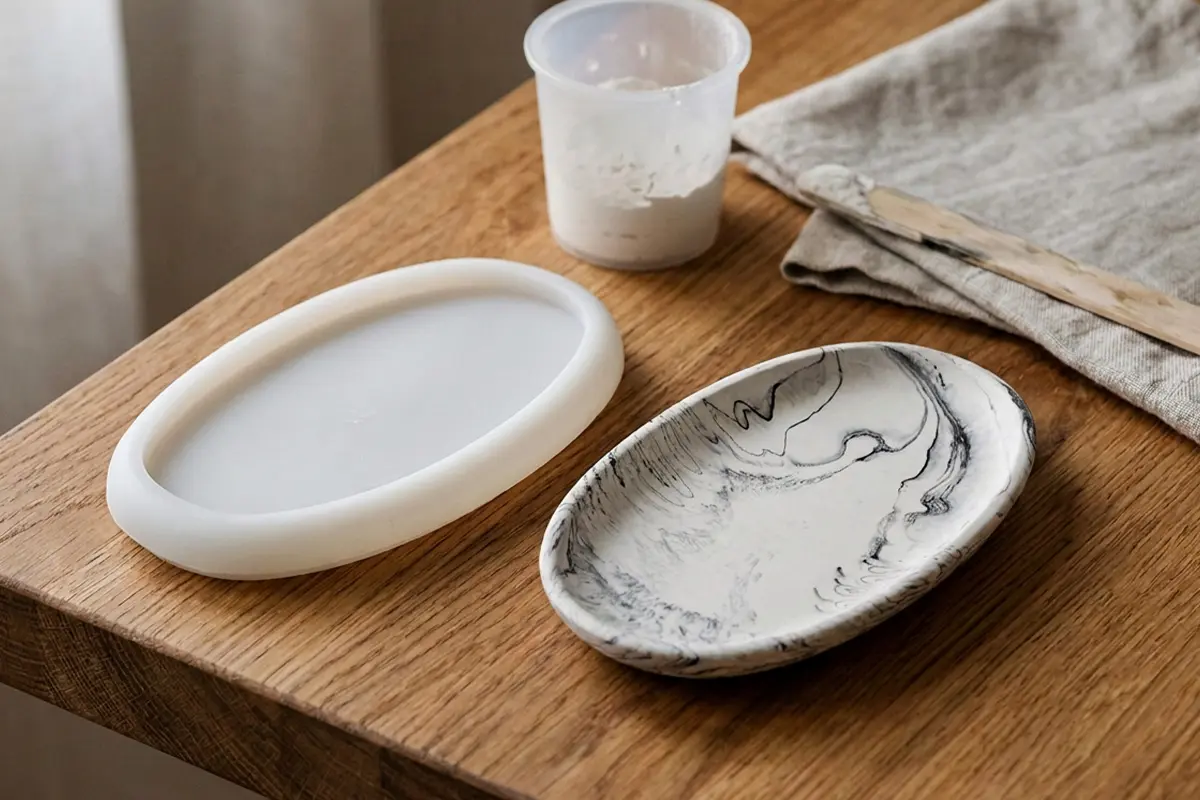
You mixed, you poured, you waited… and hours later your cast is still soft, tacky or crumbly. Frustrating, but almost always fixable. In the vast majority of cases, Jesmonite® not setting comes down to one thing: the mix. Here we walk through how long a set really takes, the main reasons it goes wrong, and exactly how to rescue a bad piece or prevent it next time.
First, make sure you are not just being impatient. Jesmonite® sets in stages, and the piece is fragile long before it is finished.
For AC100, the go-to variant for indoor decorative casting, you can usually demould after roughly 30 minutes. At that point the piece may still feel warm from the chemical reaction that has taken place, but it is firm enough to demould. It should hold its shape and no longer take a fingerprint when you press it gently; if it still dents, give it a little longer. It will never be sticky, though it can still feel slightly damp at this stage. It is not fully cured yet, though. AC100 keeps hardening over the first 24 hours, so it feels a little soft and chalky when you first pop it out and steadily gets tougher over the course of that first day.
The cement-based variants take longer to reach that stage. AC84 is ready to demould after about 2 hours and AC730 after around 4 hours, and both then reach full strength over the first 24 hours, exactly like AC100. So always check which variant you are working with before you decide the cast has failed: a piece that looks like it is “not setting” at 30 minutes is often simply an AC84 or AC730 cast that just needs its longer demould time.
So if your cast has only been sitting for ten minutes, that is normal. Give it the full demould window for your variant first. If it is still genuinely soft, sticky or crumbling well past that time, one of the reasons below is the culprit.
This is by far the most common cause. Jesmonite® is a two-part material: a mineral Jesmonite® base powder and a liquid, combined at a specific ratio by weight. AC100 uses a standard ratio of 1 part Jesmonite® liquid to 2.5 parts base powder, but always use the exact ratio for your own variant, as it varies between variants (AC84 and AC730, for example, use 1 part liquid to 5 parts base).
Get that balance wrong and the chemistry cannot complete properly:
If your last batch was soft and sticky, you almost certainly added too much liquid or not enough powder. Adjust and try again with a fresh, accurately weighed batch. Our guide on how much Jesmonite® you need helps you get quantities right.
Even with the right ratio in mind, you can only hit it if your scales are honest. A lot of “why won’t it set” problems trace back to measuring, not mixing.
Small, cheap kitchen scales often round to the nearest 5 grams or drift as the battery fades. On a small casting that is a big proportional error, easily enough to push you into the soft-and-sticky zone. A few tips:
Weigh accurately and you remove the single biggest source of a failed set.
Right ratio, accurate scales, and it still came out patchy? Then the two parts may not have been fully combined. If pockets of dry powder or unmixed liquid are left behind, those areas cannot cure and will stay soft, lumpy or chalky, often with spots and trapped air bubbles, while the rest of the piece sets fine.
To mix properly, stir until the blend is completely smooth and lump-free, scraping the sides and bottom of the cup where dry powder loves to hide. For anything more than a tiny pour, a high-shear mixer on a drill is far more reliable than a hand stir, and it doubles as your best defence against air bubbles. AC100 gives you a comfortable working window of about 10 to 15 minutes (a little less if the room is above 25 °C), so work steadily and thoroughly before the mix begins to thicken.
Sometimes nothing is actually wrong. The cast simply has not finished. As noted above, a demoulded AC100 piece feels soft and chalky at first and only reaches full strength after 24 hours. If you seal or start using it too early, it can feel weak and disappointing even though it would have been perfectly solid the next day.
A related trap is leaving the cast in the mould too long. Jesmonite® can “sweat” if it sits well past its demould time, leaving surface marks or a slightly tacky skin. Aim to demould around 30 minutes, sanding is easiest now, while the cast is still relatively soft, then let the piece cure in the open air for a full day before sealing or use.
Cool, damp conditions can also slow curing down, so give your pieces a warm, dry, well-ventilated spot to harden.
Your silicone mould needs to be completely clean and dry before you pour. Water still sitting in the mould, or leftover residue from Jesmo Clean or another cleaner, interferes with the surface as the cast sets, leaving marks and patchy spots or soft, weak areas where the mix met that moisture. Wash moulds with warm water and mild soap, rinse well, and let them dry fully before the next pour: a proper drying time is all it takes to avoid this.
Can you save a bad cast? Honestly, a piece that has properly under-set is best treated as a learning batch rather than rescued. You cannot re-cure a cast that was mixed wrong. What you can do:
Prevention is simpler than any rescue. To get a reliable set every single time:
If measuring is where things keep slipping, one of our AC100 starter kits takes the guesswork out by pairing the Jesmonite® base powder and Jesmonite® liquid in the right proportions, so you can focus on the fun part.
Ready to try again with confidence? Browse our full range of Jesmonite® variants, pigments and moulds at gigacrea, all in stock and dispatched fast, and get your next cast setting perfectly. For more troubleshooting, see our guide to the most common Jesmonite® mistakes.
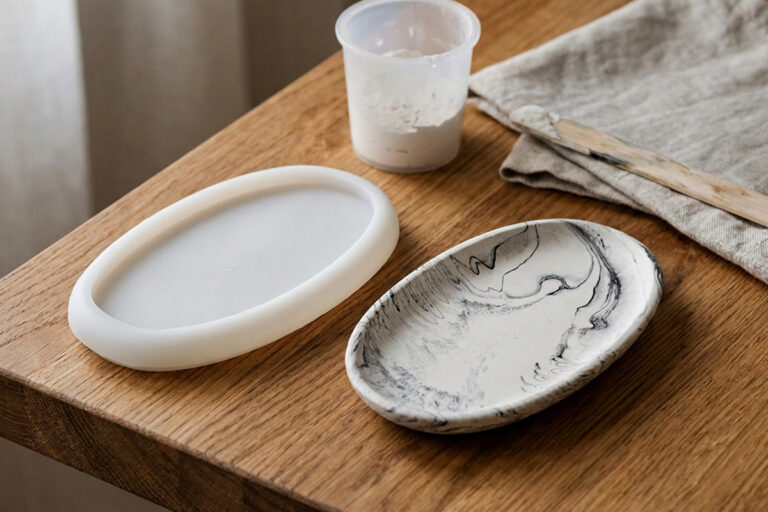
Everything from this guide in one basket: AC100 sets - 1750, with the recommended extras optional.


★★★★★ Rated Excellent on Trustpilot
A persistently sticky or tacky surface almost always means too much liquid in the mix, or the two parts were not blended thoroughly. Check your ratio and your scales, mix a fresh batch until completely smooth, and it should set firm. If the piece was mixed correctly, give it the full 24 hour cure before deciding.
Crumbly or chalky results usually point to an off ratio (often too much powder or too little liquid) or a cast that simply has not finished curing yet. A correctly mixed AC100 piece feels a little chalky straight out of the mould and hardens over the first 24 hours, so wait out the full cure before judging it.
Curing in a warm, dry, well-ventilated space helps, as cool or damp conditions slow it down. Do not force it by changing the ratio, as using less liquid to set faster makes the mix thicken too quickly and trap bubbles. AC100 is already the quickest Jesmonite® to demould (about 30 minutes), the cement-based AC84 and AC730 actually take longer, so there is no faster variant to switch to.
Sand as soon as you can, right after demoulding, while the cast is still relatively soft and easiest to work. Sealing is different: wait until the piece is fully cured, which for AC100 means a good 24 hours after demoulding, before you seal the porous surface ahead of any contact with water or outdoor use.
Sofie knows every Jesmonite variant, ratio and fix. If a cast can go wrong, she's un-wronged it. Part of the Gigacrea maker team.