Nothing here yet. Every maker starts somewhere.
Pick a starter kit with everything for your first cast, or let the beginner guides walk you through it.
Shop the starter kits Read the beginner guides
 By Mira Casteels
·
8 min read
Beginner
By Mira Casteels
·
8 min read
Beginner
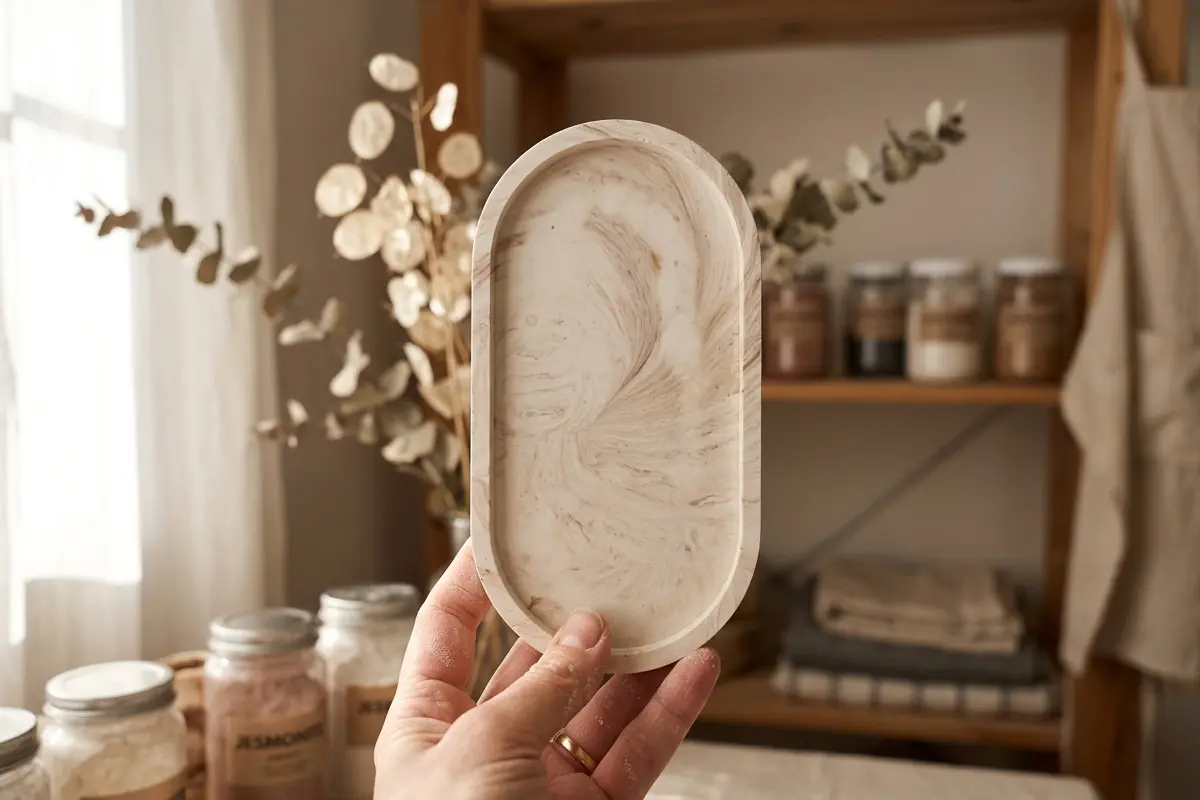
Making your first cast is easier than you think, and Jesmonite® is one of the friendliest materials to start with. It is water-based, non-toxic and solvent-free, so you can work at the kitchen table without harsh fumes. In this guide you will learn exactly how to cast with Jesmonite® from start to finish: what to gather, how to get the mixing ratio right, a clear step-by-step for your first pour, and how to avoid the mistakes that trip up most beginners.
 Jesmonite® starter kit - Small round bowl
Base, liquid, mixing basics and a first mould included
€ 19,99
Add
Jesmonite® starter kit - Small round bowl
Base, liquid, mixing basics and a first mould included
€ 19,99
Add
 Jesmonite sealers satin - 50recommended
Small satin sealer, protects against water and daily use
€ 9,99
Add
Jesmonite sealers satin - 50recommended
Small satin sealer, protects against water and daily use
€ 9,99
Add
Not sure how much to mix? Use our free Jesmonite® calculator — enter the water weight of your mould and it gives you the exact liquid and base amounts.
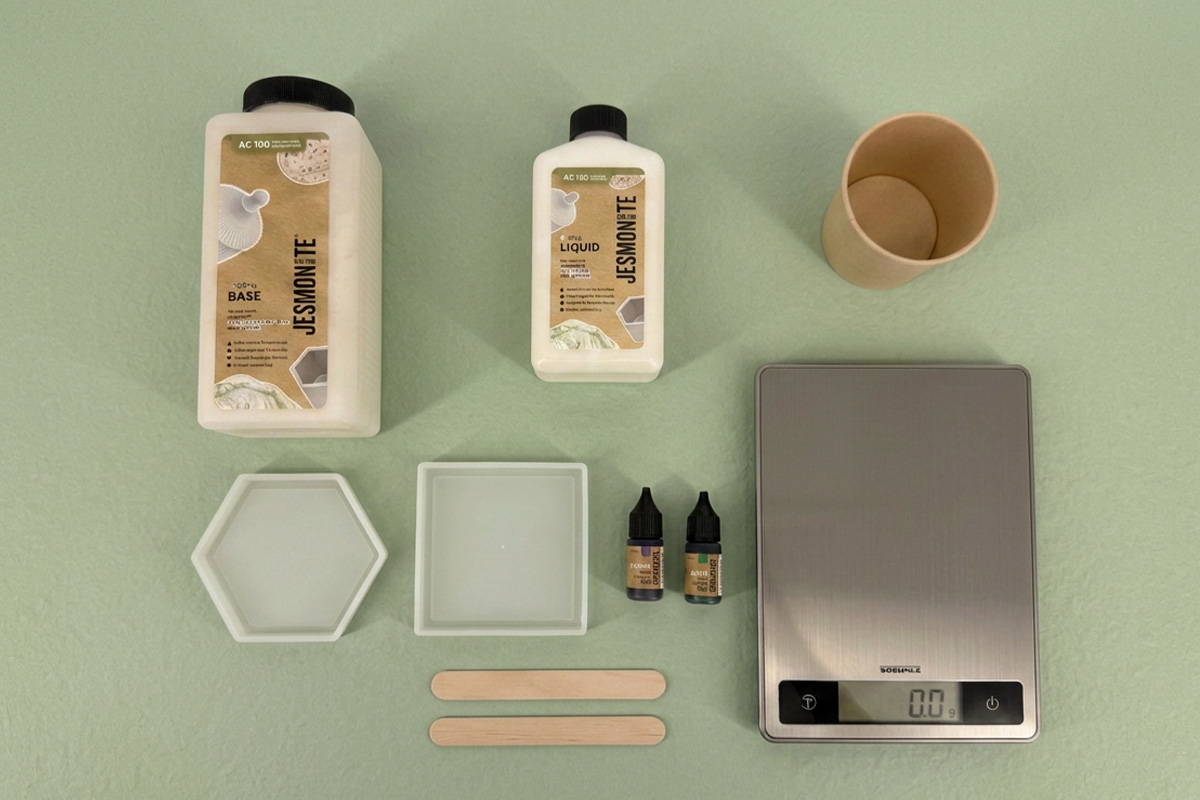
You do not need a full workshop to begin. A small, tidy kit and a clear work surface will do. Here is the short list of essentials.
The ratio is the single most important part of learning how to cast with Jesmonite®. Get it right and your cast sets hard and even. Get it wrong and it may stay soft, crack or crumble.
For AC100 the standard mix is roughly 1 part Jesmonite® liquid to 2.5 parts base powder by weight. So for every 100 g of Jesmonite® liquid you would add around 250 g of powder. Because this is measured on scales rather than by volume, keep your cups on the digital scale as you pour each part.
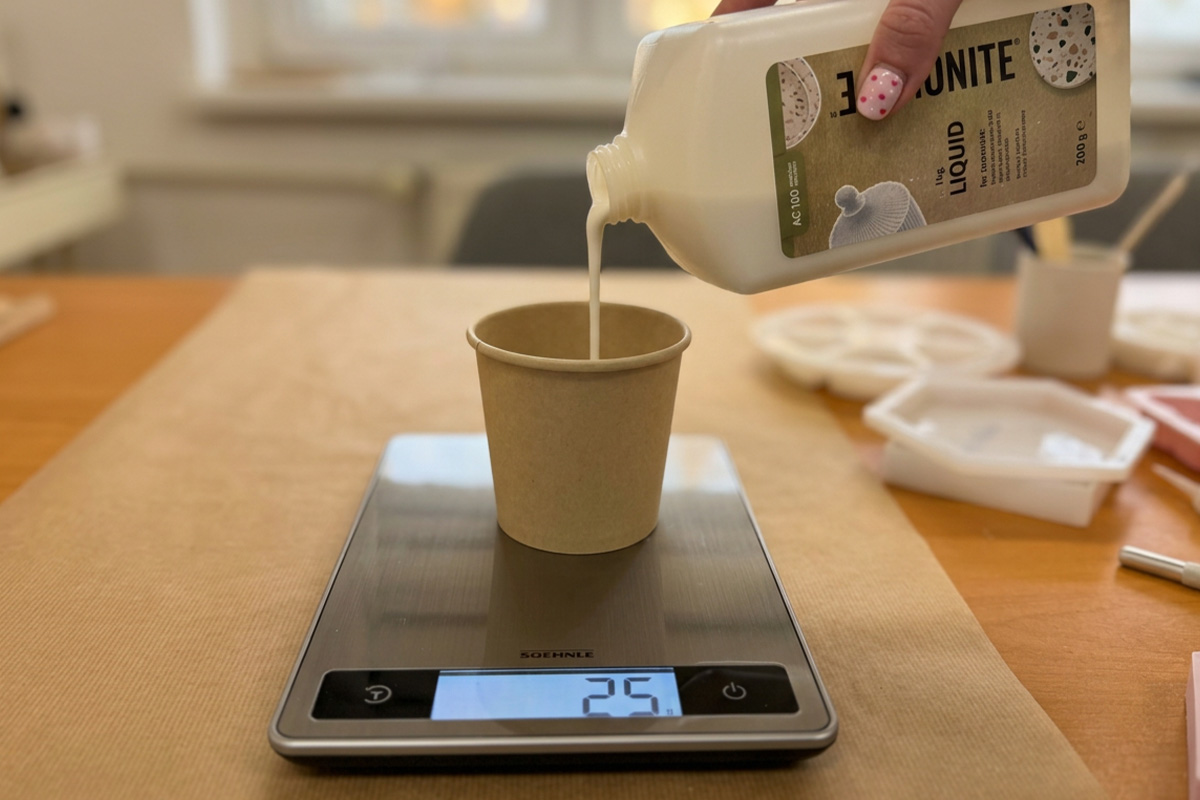
Ratios vary between Jesmonite® variants, so use the one that matches what you are casting: AC100 mixes at 1:2.5 (Jesmonite® liquid to base), while the cement-based AC84 and AC730 mix at 1:5. Weigh both parts on a digital scale for a reliable result.
A useful habit: work out how much total mix your mould needs before you start, then split that into powder and liquid amounts. Mixing too little means a half-empty mould, and mixing too much wastes material, since Jesmonite® cannot be poured once it starts to set.
Not sure how much to make? Many of our own moulds list the amount you need right in the product description. For any other mould, use this simple trick for AC100: fill your empty mould with water and weigh it, add about 10% extra (some mix always stays in the cup), then divide that figure by 2 to get your Jesmonite® liquid amount and multiply the liquid by 2.5 to get your Jesmonite® base amount. You can also work out quantities with an online Jesmonite® calculator or the Jesmonite® app. For a full walkthrough, see our guide on how much Jesmonite® you need.
Set everything out within reach before you begin, because once the Jesmonite® liquid and powder meet you have around 10 to 15 minutes of working time (a little less if your room is above 25 °C). Follow these steps in order.
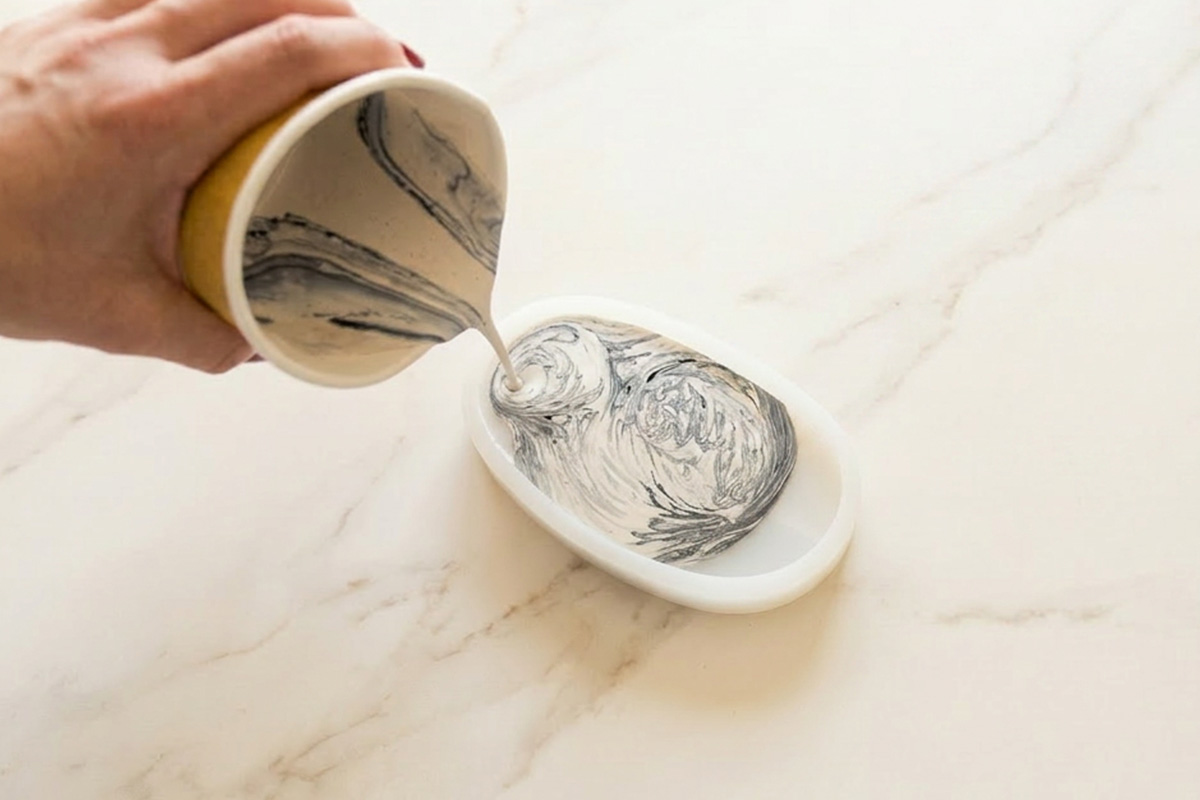
That is the whole process. Your first cast will teach you more than any guide, so do not aim for perfection.
Air bubbles are the most common cosmetic problem for beginners, showing up as little pits on the surface once you demould. The good news is they are easy to reduce with a few simple habits.
A few tiny bubbles are normal and can be sanded or filled later. Aim for progress, not a flawless first result. For more detail, see our full guide on how to prevent and fix Jesmonite® air bubbles.
Patience pays off here. Jesmonite® AC100 is typically firm enough to demould after about 30 minutes, though cooler rooms and thicker casts take longer. The piece will feel touch-dry and no longer cold or damp when it is ready.
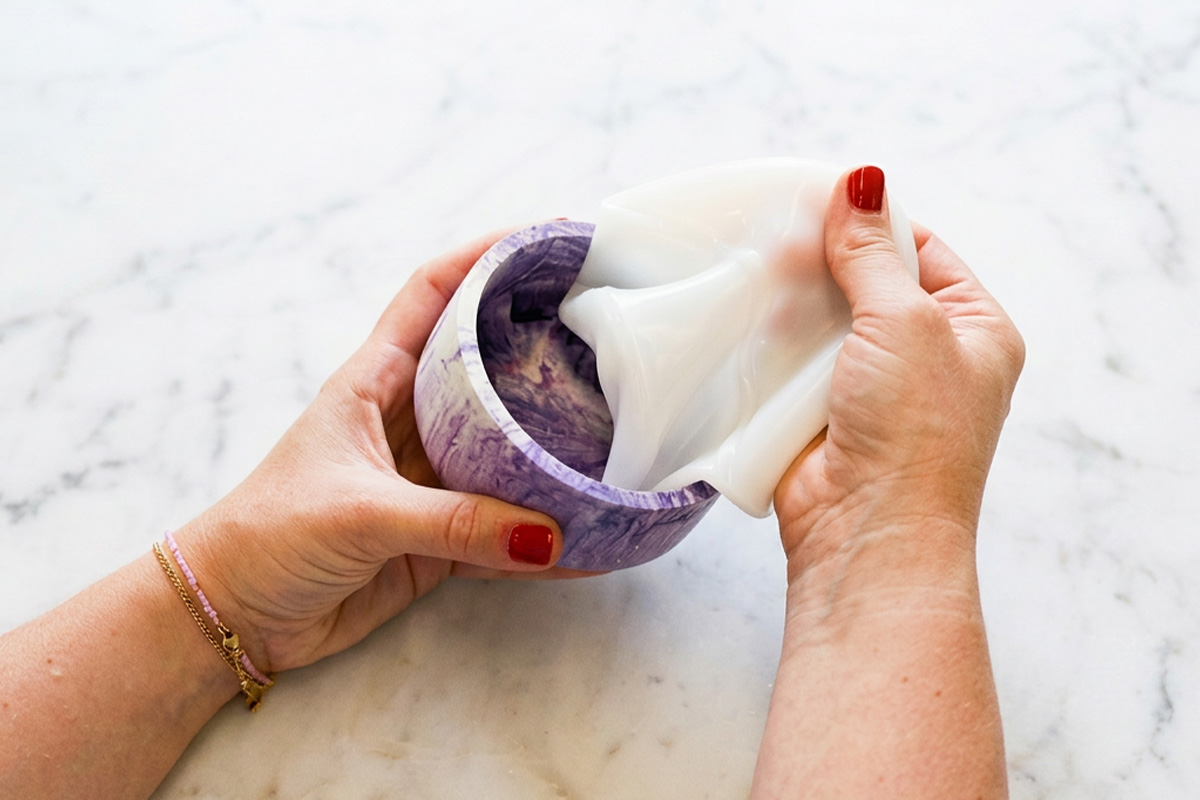
To demould, gently peel the flexible silicone away from the edges and flex the mould to release the cast, rather than pulling on the piece itself. If it resists, give it a few more minutes.
Remember that demoulding is not the same as fully cured. A fresh Jesmonite® cast keeps getting stronger over the first 24 hours, so handle it carefully at first. Sand any rough edges with fine sandpaper and a sanding block soon after demoulding, while the cast is still relatively soft and easier to work. Leave sealing and everyday use until it is fully cured after 24 hours.
Almost everyone hits at least one of these on their first few casts. Knowing them in advance saves a lot of frustration. For the full rundown, read our guide to the most common Jesmonite® mistakes and how to fix them.
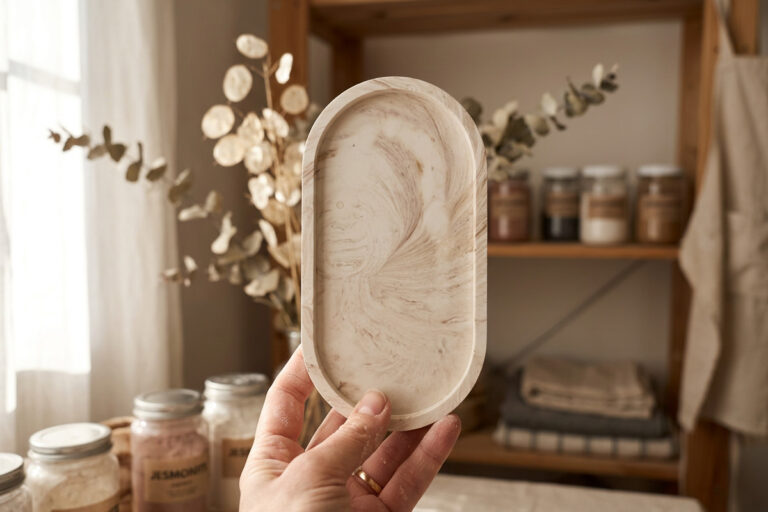
Jesmonite® is genuinely beginner-friendly, and the best way to learn is to get your hands mixing. Browse the full Jesmonite® range to pick your materials, or grab a ready-to-go AC100 starter kit and a coaster mould and pour your very first piece this weekend.
Everything from this guide in one basket: Jesmonite® starter kit - Small round bowl, with the recommended extras optional.

★★★★★ Rated Excellent on Trustpilot
Yes. Jesmonite® AC100 is water-based, non-toxic and forgiving, which makes it one of the easiest casting materials to learn on. As long as you weigh your ratio accurately and mix thoroughly, your first indoor decorative cast should turn out well.
The standard AC100 mix is around 1 part Jesmonite® liquid to 2.5 parts base powder by weight, while the cement-based AC84 and AC730 mix at 1:5. Always weigh both parts on digital scales rather than measuring by eye, and use the ratio for the variant you are casting.
AC100 is usually firm enough to demould after about 30 minutes, depending on room temperature and how thick your cast is. It then keeps hardening over the next 24 hours. Sand soon after demoulding while it is still soft, and wait until it is fully cured before sealing or using the piece.
Silicone moulds work best because they flex and release the cast cleanly, and they can be reused many times. A flat coaster or tray mould is a great first project as it is quick to fill and easy to demould.
Mira has walked hundreds of makers through their very first cast in the Gigacrea workshop. Part of the Gigacrea maker team.