Nothing here yet. Every maker starts somewhere.
Pick a starter kit with everything for your first cast, or let the beginner guides walk you through it.
Shop the starter kits Read the beginner guides
 By Mira Casteels
·
6 min read
Beginner
By Mira Casteels
·
6 min read
Beginner
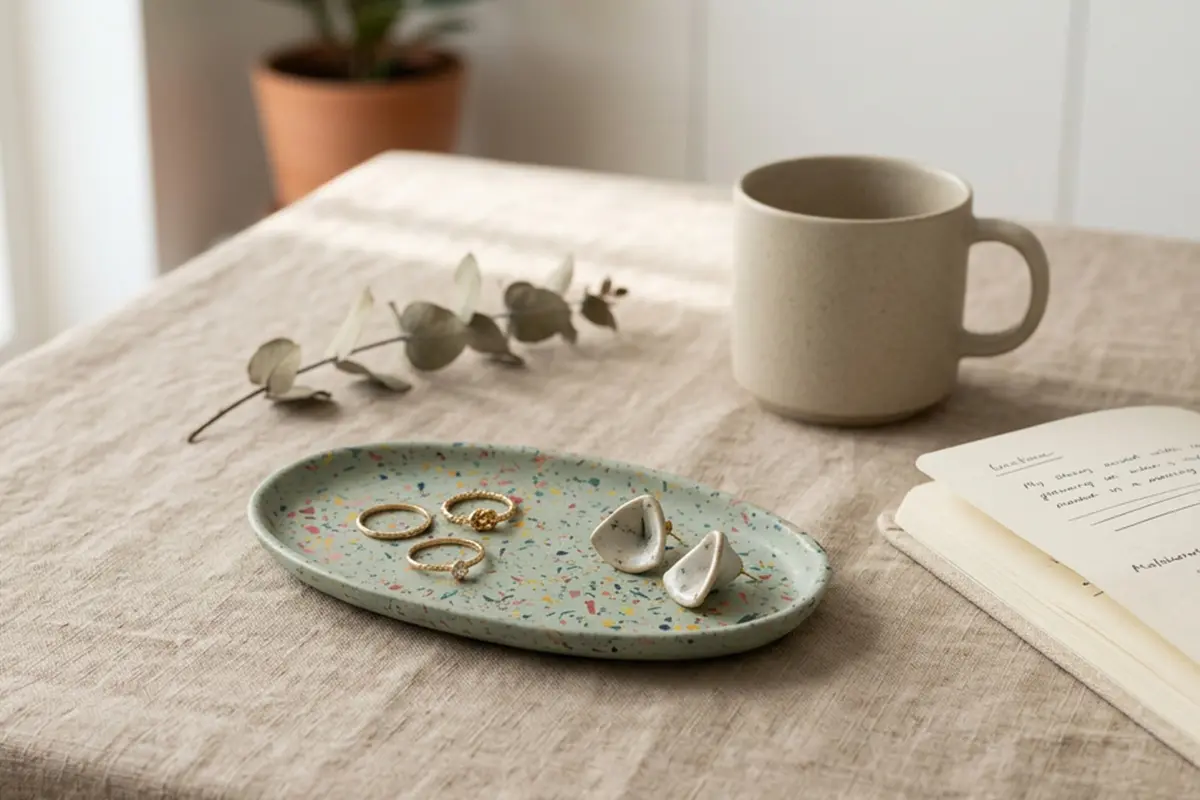
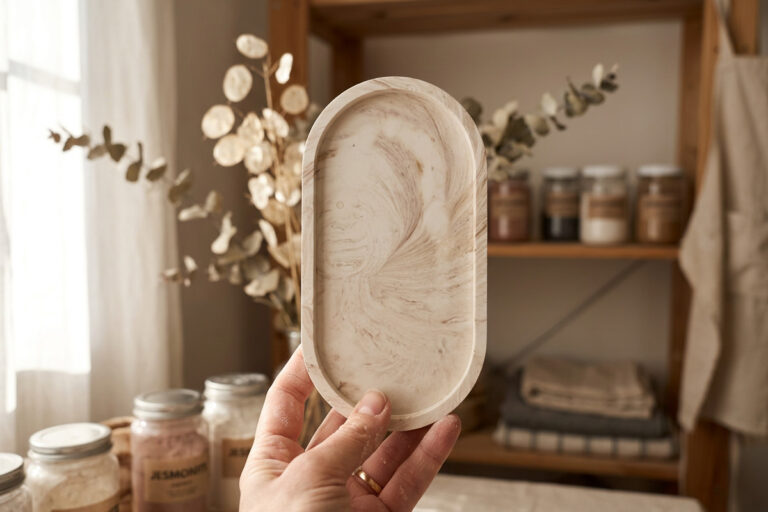
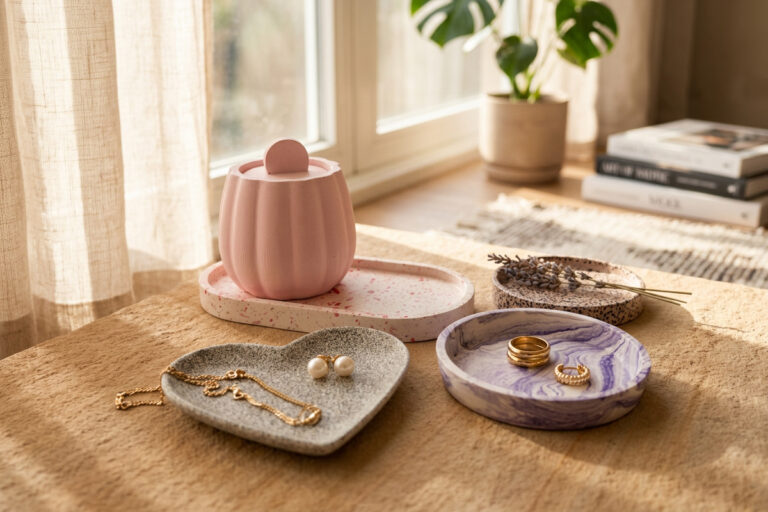
If you have seen those pastel trays, speckled coasters and stone-look vases all over Instagram and wondered what they are made from, the answer is usually Jesmonite®. In this complete beginner’s guide you will learn what Jesmonite® is, what it is made of, how it compares to plaster, concrete and epoxy, and exactly what you need to make your first piece.
 Jesmonite® starter kit - Small round bowl
Base, liquid, mixing basics and a first mould included
€ 19,99
Add
Jesmonite® starter kit - Small round bowl
Base, liquid, mixing basics and a first mould included
€ 19,99
Add
 Jesmonite sealers satin - 50recommended
Small satin sealer, protects against water and daily use
€ 9,99
Add
Jesmonite sealers satin - 50recommended
Small satin sealer, protects against water and daily use
€ 9,99
Add
So, what is Jesmonite®? It is a water-based, two-part casting material made from a mineral base powder and a liquid acrylic. You mix the two together, pour the blend into a mould, and after a short wait you pop out a solid, stone-like object. No kilns, no torches and no strong chemical smells.
Jesmonite® has become the go-to material for makers because it is genuinely beginner-friendly. It sets fast, captures fine detail beautifully and takes colour well. Just as importantly, it is an eco-friendlier alternative to plaster, concrete and epoxy, which is a big part of why it has taken off with hobbyists and small studios alike.
You can explore all our Jesmonite® products to see the different variants available, but let’s first look at what actually goes into it.
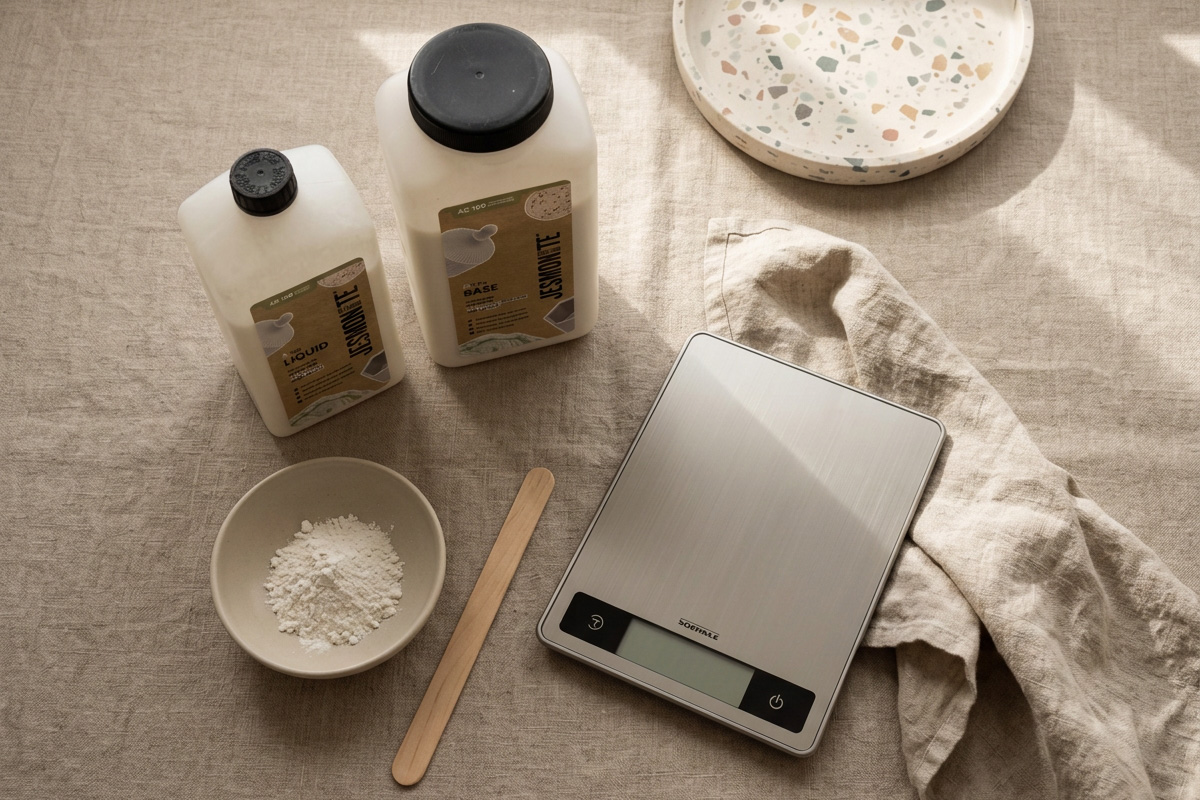
Jesmonite® is a two-part material, and that is the key thing to understand. In simple terms, you are combining:
You weigh out both parts and stir them into a smooth, pourable mix. Because it is water-based, the most common version, AC100, is non-toxic and free of solvents and VOCs. That means no fumes filling your kitchen and no need for heavy-duty protective gear for basic indoor casting.
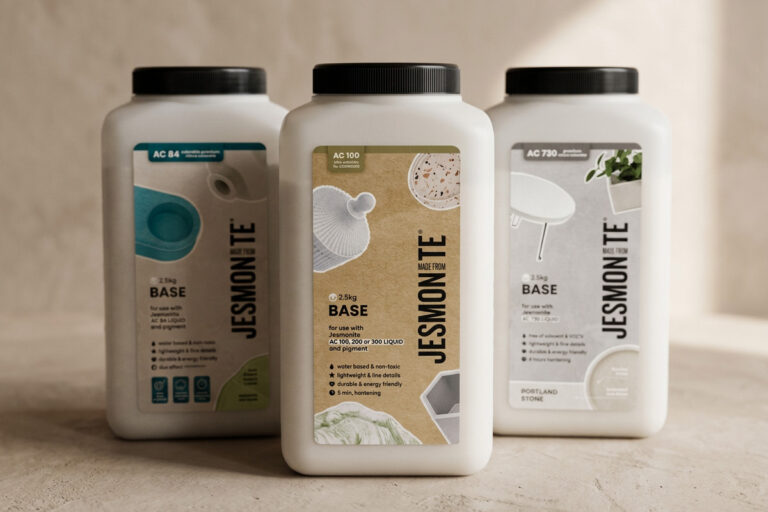
Every Jesmonite® variant has its own recommended mix ratio by weight. AC100 is mixed at 1:2.5 (Jesmonite® liquid to base), while the cement-based AC84 and AC730 are both mixed at 1:5. Getting that ratio right is what gives you a strong, reliable result, so always follow the exact ratio printed on your product or its instructions rather than guessing.
If you have tried other casting materials, you will quickly see why so many makers switch to Jesmonite®.
Versus plaster: plaster is cheap and easy, but it chips easily and is not very water-resistant. Jesmonite® is far tougher and, once sealed, stands up to everyday use much better.
Versus concrete: concrete gives a lovely raw look but is heavy, slow to cure and can crack. Jesmonite® delivers a similar stone effect with less weight and a faster, more predictable set.
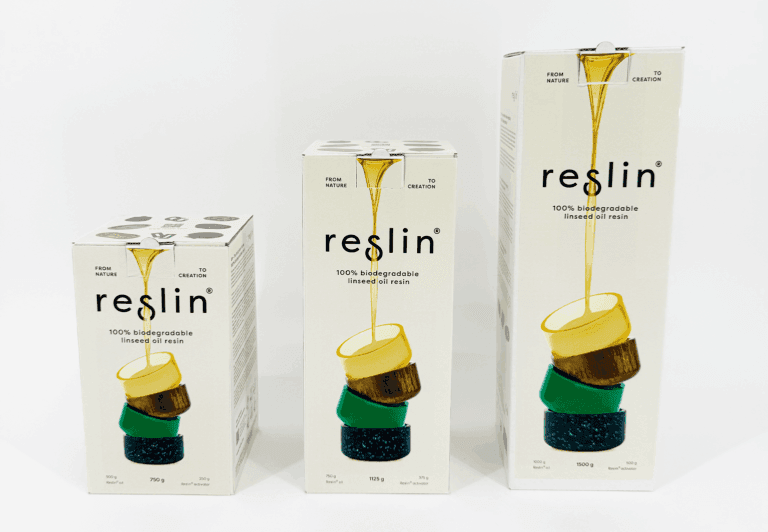
Versus epoxy: epoxy resin is glossy and durable, but it is solvent-based, can smell strongly and needs careful handling. Jesmonite® is water-based and much friendlier for a home workspace. If you love the resin look but want a greener option, the plant-based Reslin® resin is worth a look too.
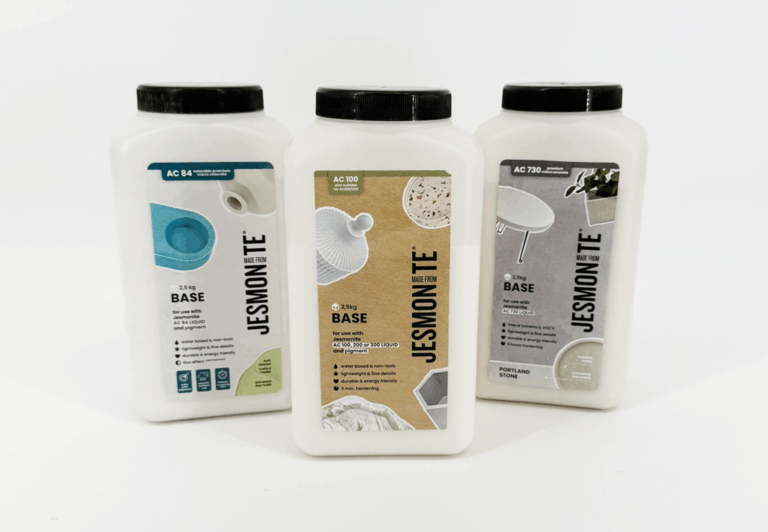
Jesmonite® is not a single product but a small family of variants, each suited to different projects. Here is how the three main ones compare.
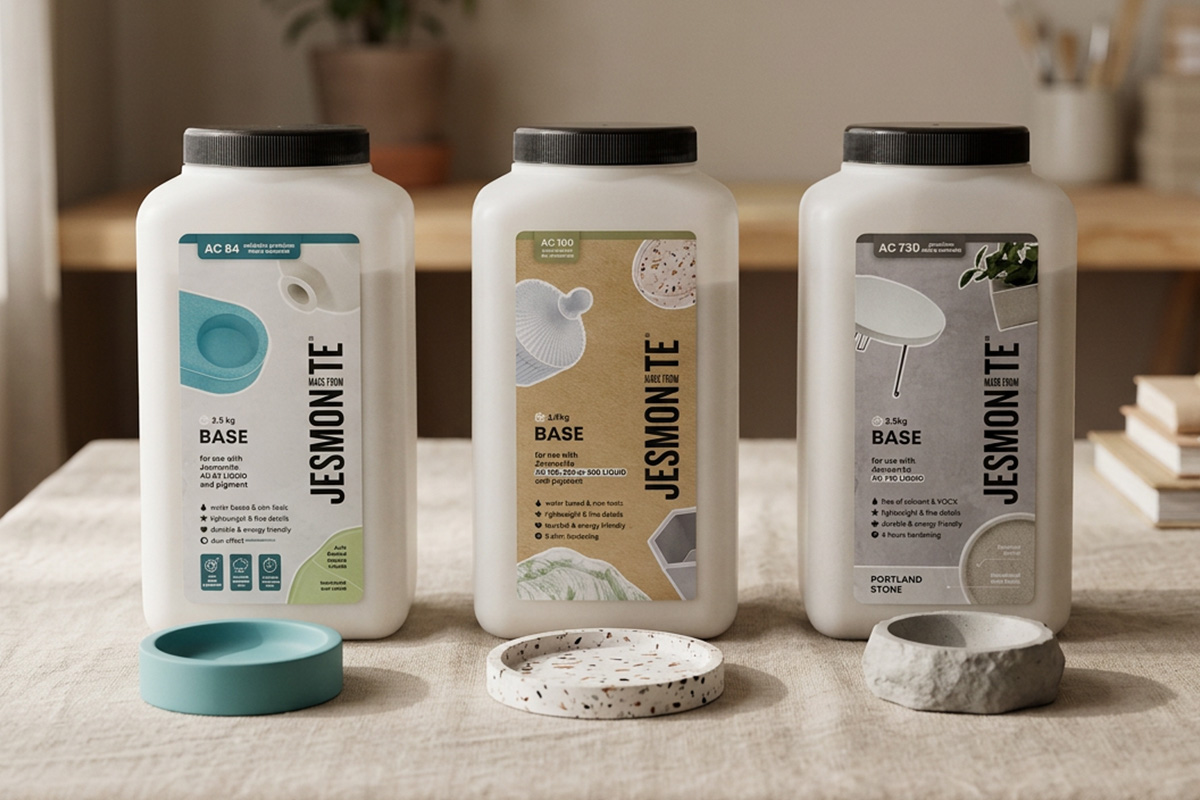
AC100 is the gypsum-based classic choice for indoor decorative casting: trays, coasters, vases, candle holders and other small homeware. It is the easiest to work with, which makes it perfect for beginners. It demoulds after about 30 minutes and is fully cured after 24 hours.
AC730 is a tough, rugged, cement-based variant. It gives beautiful stone and textured looks and is suitable for both indoor and outdoor pieces. It demoulds after about 4 hours and is fully cured after 24 hours.
AC84 is a cement-based variant and the most versatile of the three. It is weather-resistant and works both indoors and outdoors, it is easy to pour, and it can be finished smooth or with an acid-etched concrete look. It demoulds after about 2 hours and is fully cured after 24 hours.
Not sure which one to pick? Our dedicated AC100 vs AC730 vs AC84 comparison is a great next read once you know what you want to make.
This is the fun part. Jesmonite® is wonderfully versatile, so your ideas can be as simple or as ambitious as you like. Popular projects include:
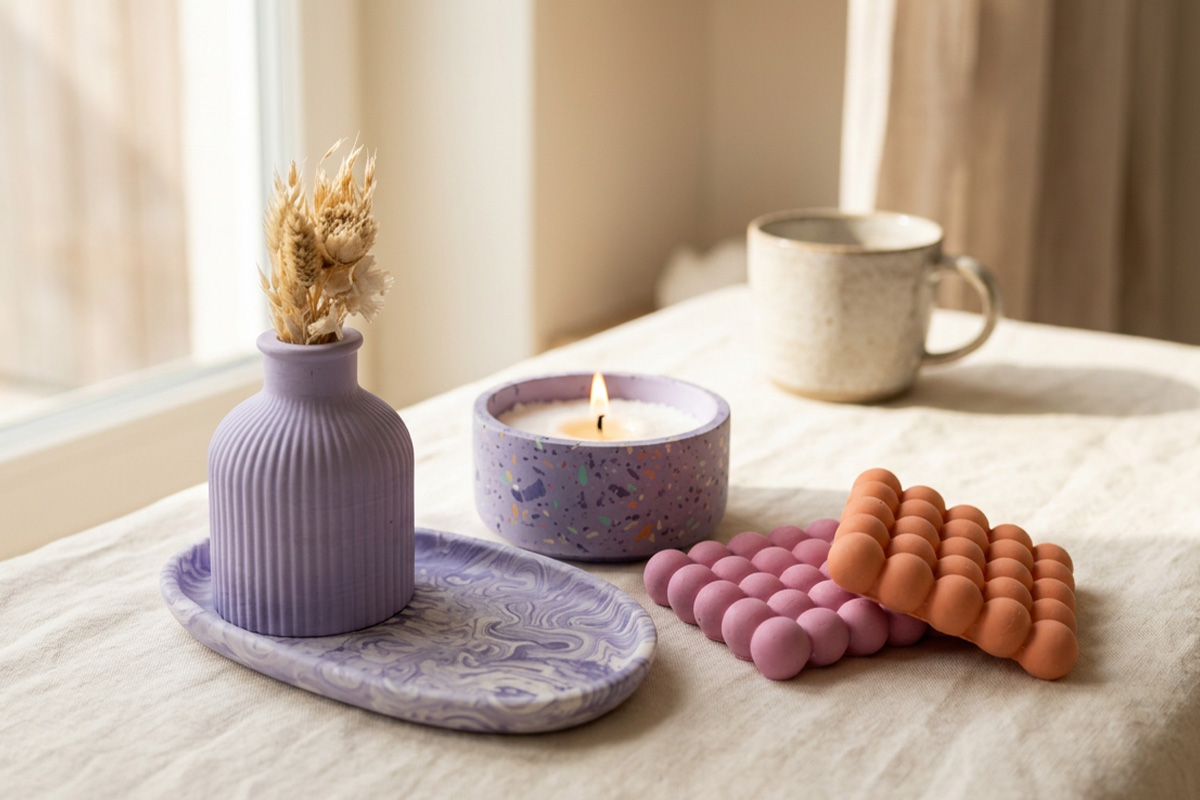
The look of your piece comes down to your mould and your colour. Browse the full range of silicone moulds to find shapes for coasters, candle holders, vases and jewellery. Then add character with liquid pigments, where a little goes a long way, plus neon shades (which come as a powder) that work beautifully with AC100 and AC84. For a real terrazzo effect, fold in small Jesmonite® chips you make yourself, or reach for ready-made alternatives such as recycled-glass GlassRoxx or granite StoneRoxx for a similar terrazzo-like speckle.
For most beginners, Jesmonite® is a very approachable material. The water-based AC100 is non-toxic and free of solvents and VOCs, so it is well suited to indoor use without strong fumes. Because Jesmonite® is water-based, there is no need to wear gloves when casting.
That said, a few sensible precautions apply. Any fine powder can be dusty, so mix in a ventilated space and avoid breathing it in. As always, follow the safety guidance on your specific product.
The easiest way to begin is with a kit that pairs the Jesmonite® base powder and Jesmonite® liquid in the correct ratio, so you can pour with confidence from day one. Take a look at the Jesmonite® starter kits, which bundle everything a first-timer needs.
Your first project is refreshingly simple:
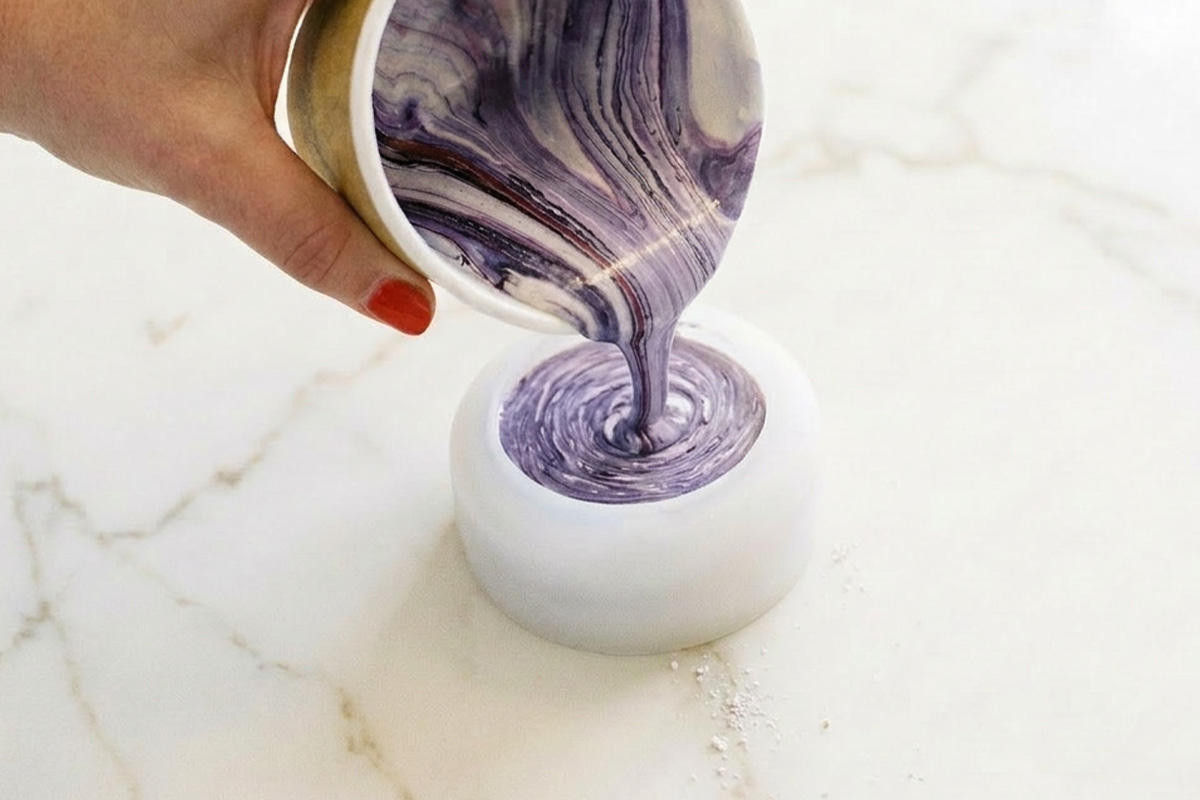
When you are ready to go deeper, our step-by-step beginner casting guide will walk you through your very first pour in full detail.
Start small and simple. One coaster in a single colour teaches you the whole process, and from there every project gets easier.
Ready to make your first piece? Explore the full Jesmonite® collection and pick a starter kit, a mould and a pigment to bring your idea to life.
Everything from this guide in one basket: Jesmonite® starter kit - Small round bowl, with the recommended extras optional.
★★★★★ Rated Excellent on Trustpilot
Jesmonite® is porous rather than fully waterproof out of the mould. For pieces that will get wet or live outdoors, apply a suitable sealer. This gives everyday items like trays and coasters much better protection against spills and moisture.
Timing depends on the variant. AC100 demoulds after about 30 minutes, AC84 after about 2 hours and AC730 after about 4 hours. All three are fully cured after 24 hours, so it is best to let your piece cure fully before putting it to use.
It depends on the look you want. Jesmonite® gives a matte, stone-like finish and is water-based and beginner-friendly, while epoxy resin gives a high-gloss, see-through finish. Many makers prefer Jesmonite® for homeware because it is easier and greener to work with indoors.
No specialist tools are required. You just need a set of scales for the mix ratio, a mixing pot and stick, and a silicone mould. A starter kit is the simplest way to gather the essentials in one go.
Mira has walked hundreds of makers through their very first cast in the Gigacrea workshop. Part of the Gigacrea maker team.