Nothing here yet. Every maker starts somewhere.
Pick a starter kit with everything for your first cast, or let the beginner guides walk you through it.
Shop the starter kits Read the beginner guides
 By Sofie Demeyer
·
7 min read
Beginner
By Sofie Demeyer
·
7 min read
Beginner
If you love resin casting but not the fumes, the harsh chemicals and the guilt, you have probably wondered whether there is a kinder option. This is where the Reslin® vs epoxy question comes up. In this guide we compare the two honestly across environmental impact, safety, curing, finish, cost and use cases, so you can pick the right resin for your next piece.
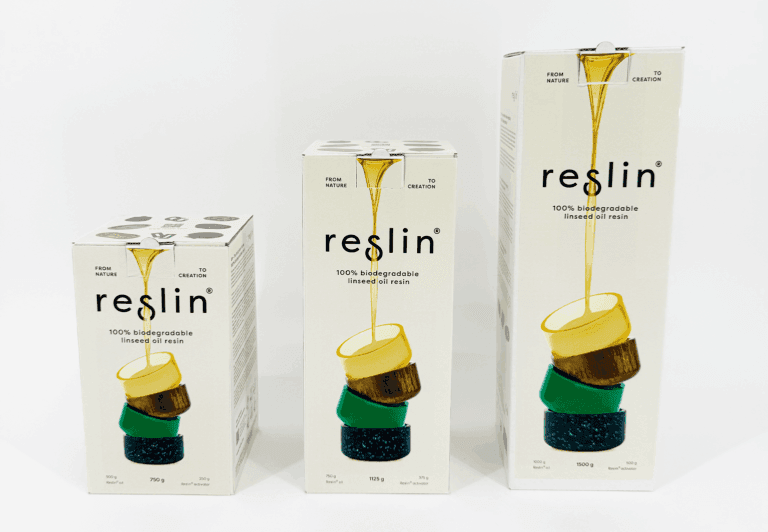
Reslin® is a plant-based casting resin sold by gigacrea, made from linseed oil and an activator from sugar beet molasses (see our full guide to what Reslin® is). Traditional epoxy is a petrochemical two-part material that has been the studio standard for years. Both cast beautiful decorative objects, but they get there in very different ways.
This is the most obvious difference. Reslin® is made from renewable, plant-based raw materials rather than crude oil. It is 100% plant-based and the first 100% plant-based alternative to epoxy, while conventional epoxy is a petrochemical product derived from crude oil. That difference matters for the footprint of everything you make.
If sustainability is a core part of your brand or your personal values, Reslin® lets you keep casting without leaning on a petrochemical product. It fits naturally alongside gigacrea’s other eco-minded materials, such as GlassRoxx recycled glass granulate and liquid pigments, so a whole project can be built around lower-impact ingredients.
Epoxy is not evil, and a well-made epoxy piece can last for decades, which is its own kind of sustainability. But on raw materials, Reslin® is the greener starting point by a wide margin.
Epoxy demands respect. Most epoxy systems ask for nitrile gloves, good ventilation and sometimes a respirator, because uncured resin and hardener can irritate skin and airways and can sensitise you over time. That is manageable, but it is a real barrier for hobbyists working on a kitchen table.
Reslin® is designed to be gentler. As a plant-based product it does not carry the sensitising hardener of epoxy, which lowers the barrier for beginners and makes casual, spontaneous projects far less of a production. We do still recommend wearing gloves, because Reslin® is sticky and messy to work with, and you should avoid eye contact and keep materials away from food and small children, but the day-to-day handling is far more relaxed.
If the smell and the heavy safety kit have been putting you off resin, Reslin® removes a lot of that friction. It is one of the friendliest ways into casting.
For anyone with sensitive skin, or a shared workspace with limited ventilation, this alone can be the deciding factor in the Reslin® vs epoxy choice.
The two resins cure in fundamentally different ways, and this shapes how you work.
Epoxy cures chemically at room temperature once you mix resin and hardener. Depending on the formula, you get a working window of anywhere from a few minutes to over an hour, then a full cure that often takes 24 to 72 hours. That long, slow set is exactly why epoxy suits deep pours and large surfaces: it stays workable and self-levels.
Reslin® cures with heat. Before mixing, you warm both components in a conventional oven at 60°C until the honey-thick activator turns runny (never use a microwave). You then mix, pour, let the piece rest for 20 minutes, and give it 20 minutes at 90°C followed by 20 minutes at 120°C in a normal oven. That oven stage takes only about an hour, which is brilliant for prototyping, jewellery and batch-making small decorative pieces, and the piece is fully cured after 24 hours. If you would rather skip the oven, you can air-dry it for at least 48 hours instead.
The trade-off is practical: your work has to fit in an oven and tolerate heat. Very large or bulky items are harder to cure this way, whereas epoxy simply sits on the bench. Both resins blend happily with pigments and fillers, so colouring and effects are easy either way. Always follow the exact mixing ratio and oven guidance on your product, since getting the ratio right is what gives you a clean, reliable cure.
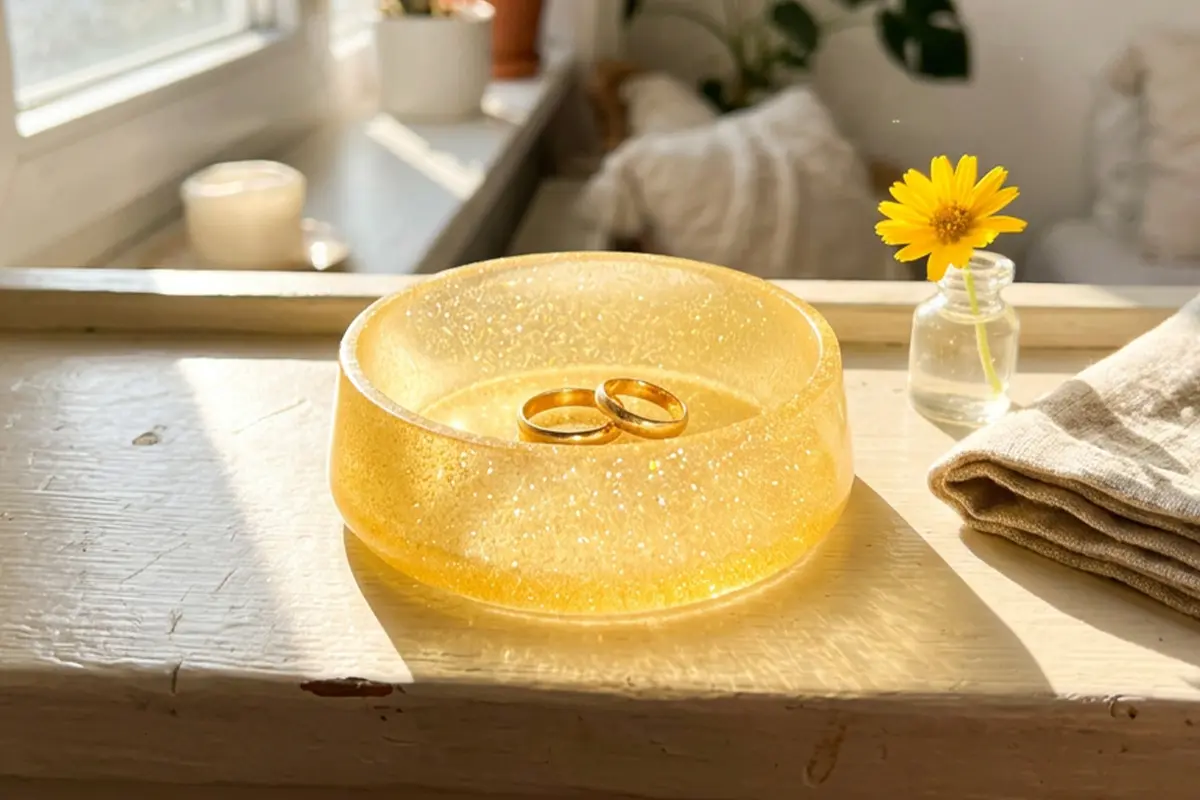
Both resins produce a smooth, hard, decorative surface that takes colour beautifully. With Reslin® colour additives you can go from soft pastels to bold, saturated tones, and mix in fillers for texture or depth.
Where epoxy still holds an edge is very high optical clarity in thick, deep pours, such as river tables or chunky paperweights where you want glass-like transparency through several centimetres of material. That is epoxy’s showpiece trick, and it does it exceptionally well.
Reslin® is at its best for indoor decorative pieces: coasters, small trays, jewellery, ornaments and prototypes where you want a lovely finish without the fumes. For a crisp result with either resin, a light sand with fine paper such as P150 sandpaper on a block tidies up edges and any small imperfections.
We will not quote prices here, because they change and depend on kit size, but a few general points are worth knowing. Epoxy is a mature, widely available product with many brands and variants, so it is easy to find and there is a formula for almost every job. That breadth is a genuine convenience.
Reslin® is a specialist plant-based product that gigacrea stocks, which means consistent quality and support, and it is kept in stock for quick dispatch. The simplest way to compare real costs for your projects is to look at the current Reslin® kits and weigh them against the epoxy you would otherwise buy, factoring in the safety gear epoxy often requires.
Here is the honest summary.
Choose Reslin® when you want:
Epoxy may still be the better tool when you need:
For most makers casting decorative homeware and jewellery at home, Reslin® covers the job while being kinder to you and the planet. For a small number of large-format or ultra-clear industrial pours, epoxy still earns its place. Many studios happily keep both and reach for whichever suits the piece.
If the eco credentials, the gentler handling and the quick oven cure appeal to you, explore the full Reslin® range, take a look at the Reslin® brand page, and grab a kit to cast your first piece. It is one of the easiest, cleanest ways to start working with resin.
Everything from this guide in one basket: Reslin KIT - bowl - Beginner, with the recommended extras optional.

★★★★★ Rated Excellent on Trustpilot
Reslin® is a plant-based resin designed for gentler handling, without the sensitising hardener of epoxy, whereas most epoxy systems call for gloves and good ventilation. With Reslin® we still recommend wearing gloves, since it is sticky to work with, and avoiding eye contact. As with any casting material, work tidily, keep it away from food and children, and follow the instructions on your product.
For most indoor decorative work, such as coasters, trays, jewellery and prototypes, yes. Epoxy can still be the better choice for very large or thick pours that will not fit in an oven, and for showpiece castings that need maximum optical clarity through deep material.
Reslin® bakes in a normal oven in three short stages: a 20-minute rest, then 20 minutes at 90°C and 20 minutes at 120°C, so the oven stage takes about an hour. The piece is fully cured after 24 hours, or you can air-dry it for at least 48 hours instead. Epoxy cures at room temperature and typically needs many hours, often a full day or more, to fully harden.
Yes. Reslin® is made from linseed oil and an activator derived from sugar beet molasses, which makes it 100% plant-based and the first 100% plant-based alternative to epoxy. That makes Reslin® the greener option on raw materials.
Sofie knows every Jesmonite variant, ratio and fix. If a cast can go wrong, she's un-wronged it. Part of the Gigacrea maker team.