Nothing here yet. Every maker starts somewhere.
Pick a starter kit with everything for your first cast, or let the beginner guides walk you through it.
Shop the starter kits Read the beginner guides
 By Mira Casteels
·
6 min read
Beginner
By Mira Casteels
·
6 min read
Beginner
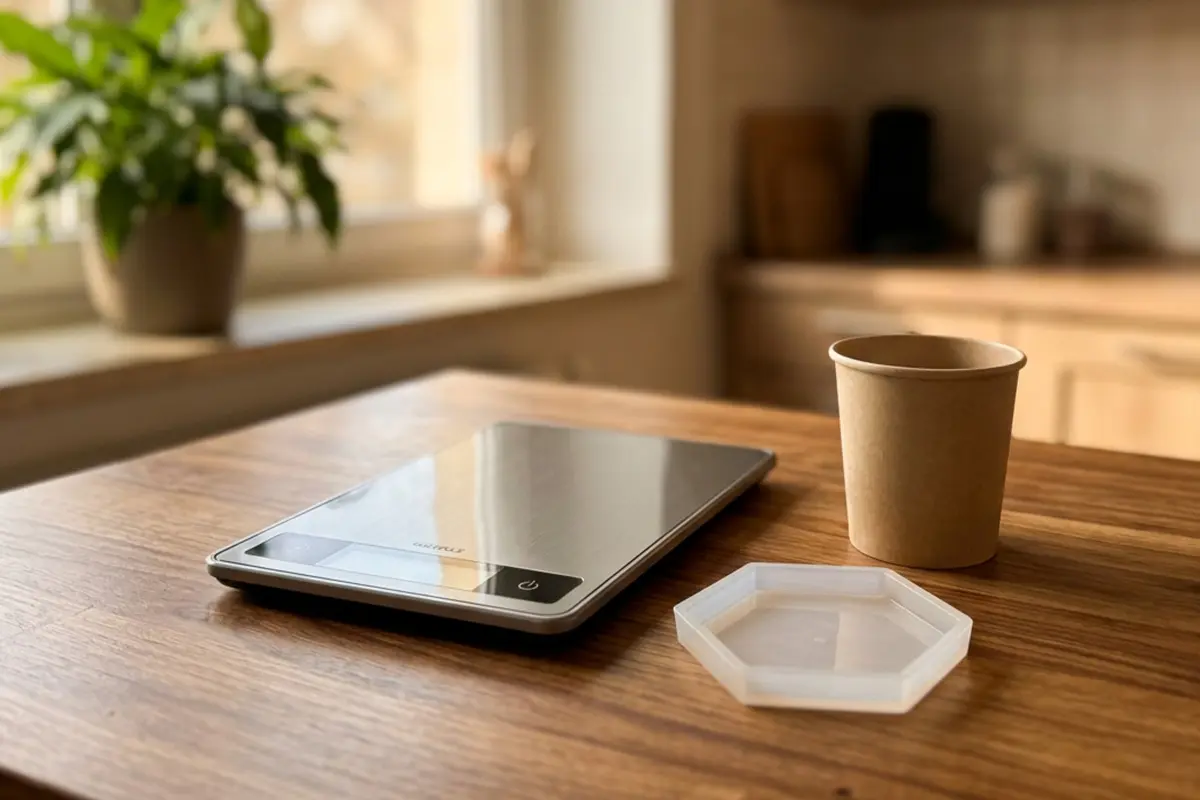
If you have ever mixed too little and watched your cast come up short, or made a huge batch and binned half of it, this guide is for you. The good news is it takes no complicated maths. With a jug of water, a set of kitchen scales and one small sum, you can work out exactly how much to mix for any mould.
In a hurry? Use our free interactive Jesmonite® calculator — pop in your mould’s water weight and it gives you the exact liquid and base amounts. Prefer to do it by hand? The simple method is below.
Below you will learn the quick water-volume method, how to turn that figure into Jesmonite® base and Jesmonite® liquid using the AC100 ratio, and a worked example you can copy for coasters, trays and pots.
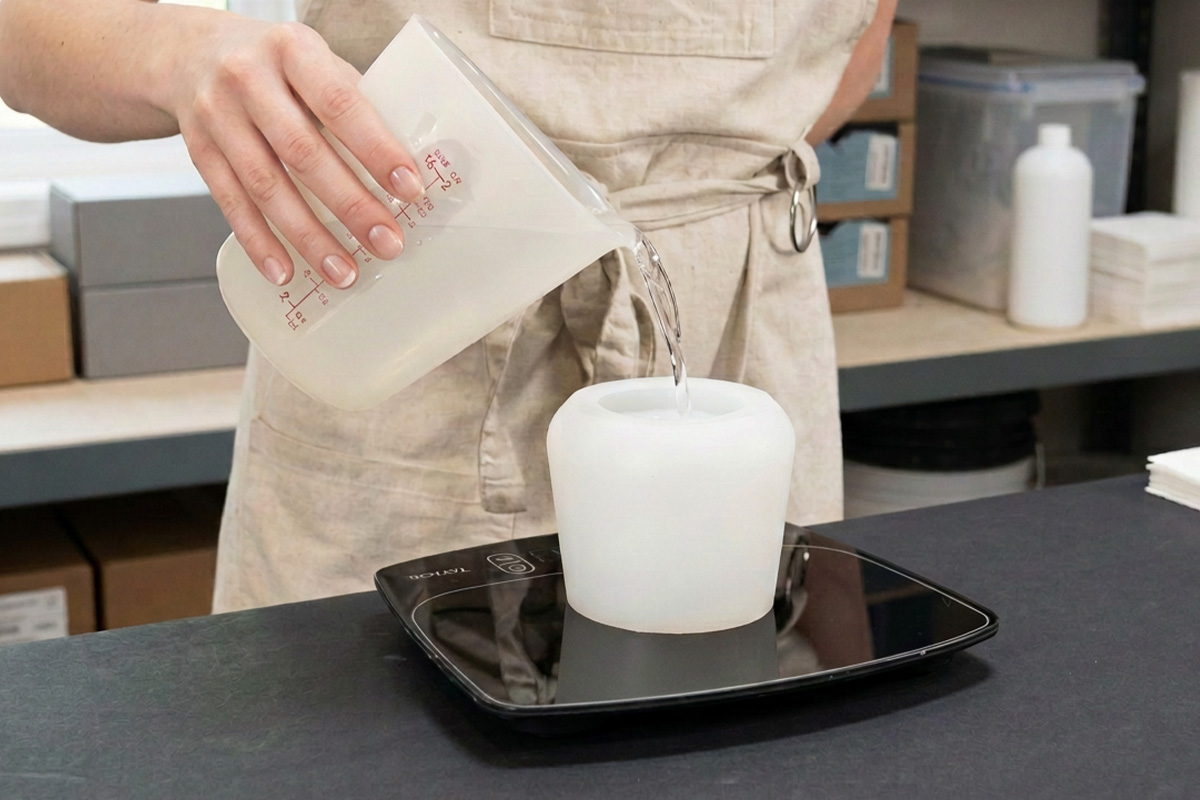
Jesmonite® is a water-based material, so water is a brilliant stand-in for working out how much to mix. The trick is to measure the water your mould holds, then feed that figure into one simple AC100 sum. Here is how to measure it:
If you are casting several pieces at once, fill and weigh each mould, then add the totals together. Working in grams keeps everything simple, because the mix ratio is by weight too.
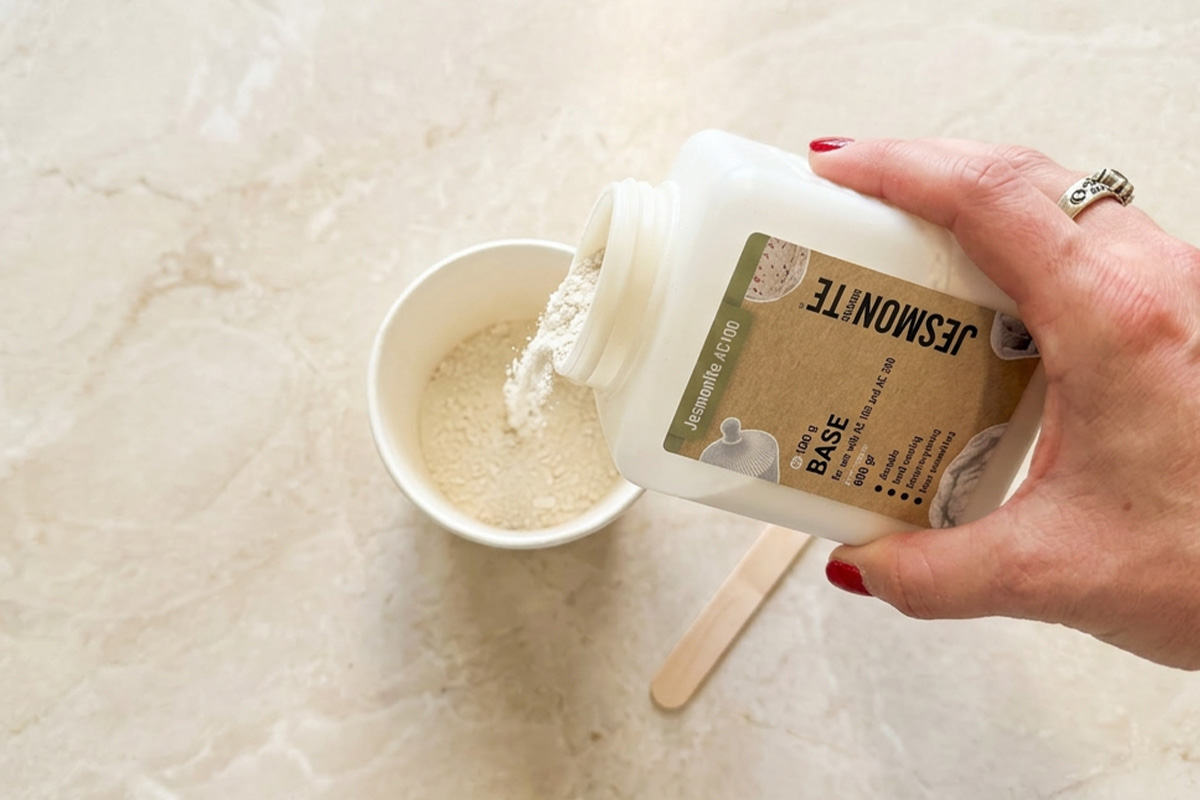
Once you know how much water your mould holds, you can turn that figure into Jesmonite® base powder and Jesmonite® liquid. AC100 mixes at 1 part Jesmonite® liquid to 2.5 parts base powder by weight. Turning your water figure into amounts takes just two small steps:
That is the whole sum. Stick to the AC100 ratio of 1 part Jesmonite® liquid to 2.5 parts base, as this is the number that decides whether your cast sets hard or comes out chalky.
Say you filled a coaster mould with water and it weighed 200 g. First add about 10% for spare, which brings you to 220 g. Now run the sum:
That gives you 110 g of Jesmonite® liquid and 275 g of Jesmonite® base, so 385 g of mix in total, with a little spare built in so you are never scraping the bottom of the pot as the material starts to thicken.
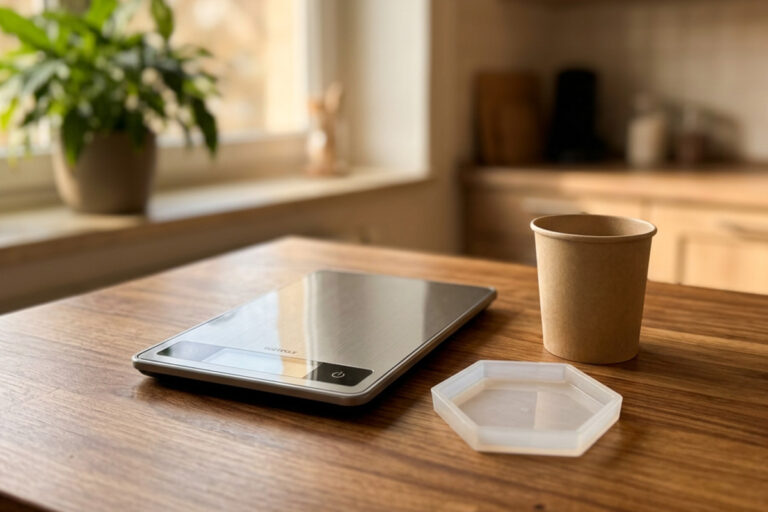
Weigh, do not guess. A cheap set of digital scales that reads to 1 g is the single best tool for consistent Jesmonite®. Getting sticky, chalky or fast-setting results is almost always a wrong ratio or inaccurate scales, not the material.
Every mould is different, so the water test always beats a generic chart. That said, here is a rough sense of scale to sanity-check your own measurement:
Browse coaster and tray moulds or vase moulds and run the water test on each one before you mix. Most of our own mould product descriptions also list the amount of mix you need, which takes some of the guesswork out. New to casting altogether? An AC100 starter kit pairs the Jesmonite® base and Jesmonite® liquid in matched quantities, which helps with your first few pours.
Mixing the right amount is half the battle. These habits help you use every gram:
One more note on planning ahead: AC100 is made for indoor decorative pieces. If you are casting something for the garden, you would switch to an outdoor-rated variant such as AC84 or AC730. Those mix at a different 1:5 ratio, so this AC100 sum does not apply. For those variants, reach for an online Jesmonite® calculator or the Jesmonite® app to work out your quantities instead.
Grab your scales, run the water test and let the AC100 sum do the rest. When you are ready to stock up, explore AC100 Jesmonite® base and Jesmonite® liquid and the full range of silicone moulds at gigacrea, with sharp prices and same-day dispatch on orders placed before 2 pm.
Everything from this guide in one basket: AC100 sets - 3500, with the recommended extras optional.


★★★★★ Rated Excellent on Trustpilot
Fill your empty mould with water, pour it onto kitchen scales and weigh it in grams. Since 1 ml of water equals 1 g, a mould holding 200 ml reads 200 g. Add about 10% for spare, then divide that figure by 2 for your AC100 Jesmonite® liquid and multiply the liquid by 2.5 for the Jesmonite® base.
AC100 uses a ratio of 1 part Jesmonite® liquid to 2.5 parts base powder by weight. To go from your water figure to amounts, halve it for the Jesmonite® liquid, then multiply that liquid by 2.5 for the base. Stick to that 1 to 2.5 ratio, or double-check your quantities with an online Jesmonite® calculator or the Jesmonite® app.
Yes. Add roughly 10% to your water measurement before you run the sum, so you are not left short as the material begins to thicken. Keep a small spare mould nearby to catch any leftover mix rather than wasting it.
This is nearly always a mixing problem, not the material. Too much Jesmonite® liquid makes a soft, chalky cast, while too little makes it thick and fast-setting. Use accurate digital scales and stick closely to the correct ratio for a hard, clean result. For more help, see our guide on why Jesmonite® is not setting.
Mira has walked hundreds of makers through their very first cast in the Gigacrea workshop. Part of the Gigacrea maker team.