Nothing here yet. Every maker starts somewhere.
Pick a starter kit with everything for your first cast, or let the beginner guides walk you through it.
Shop the starter kits Read the beginner guides
 By Lena Verhoeven
·
7 min read
Intermediate
By Lena Verhoeven
·
7 min read
Intermediate
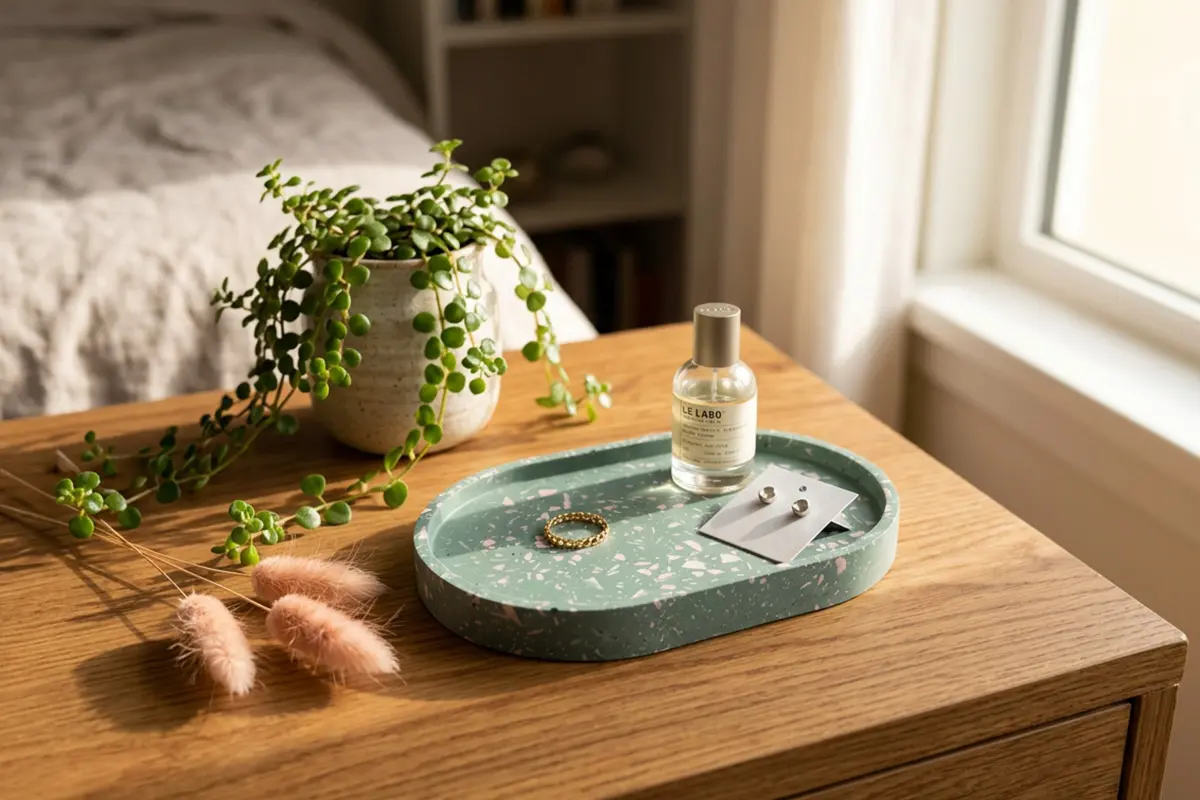
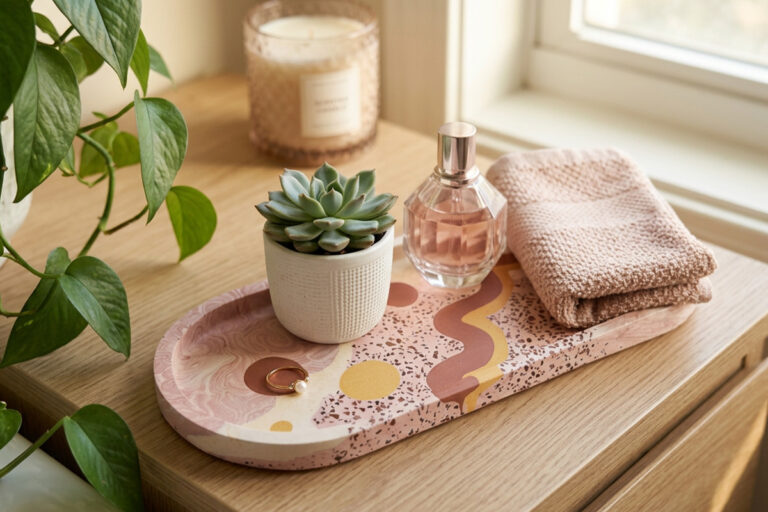
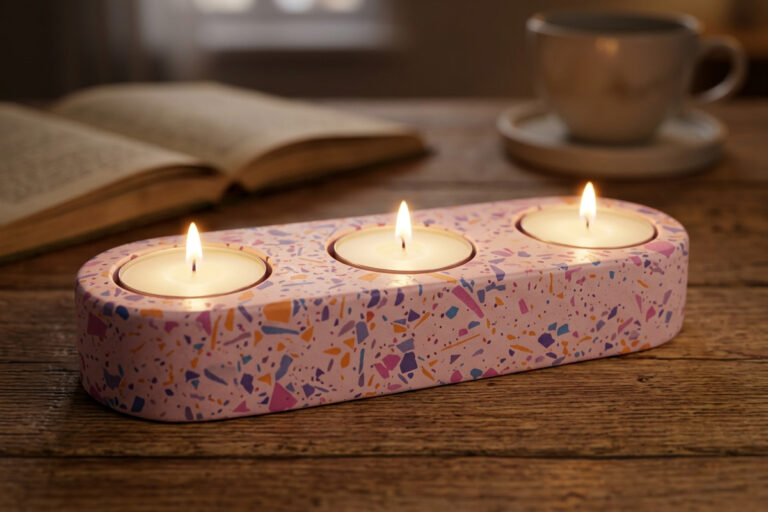
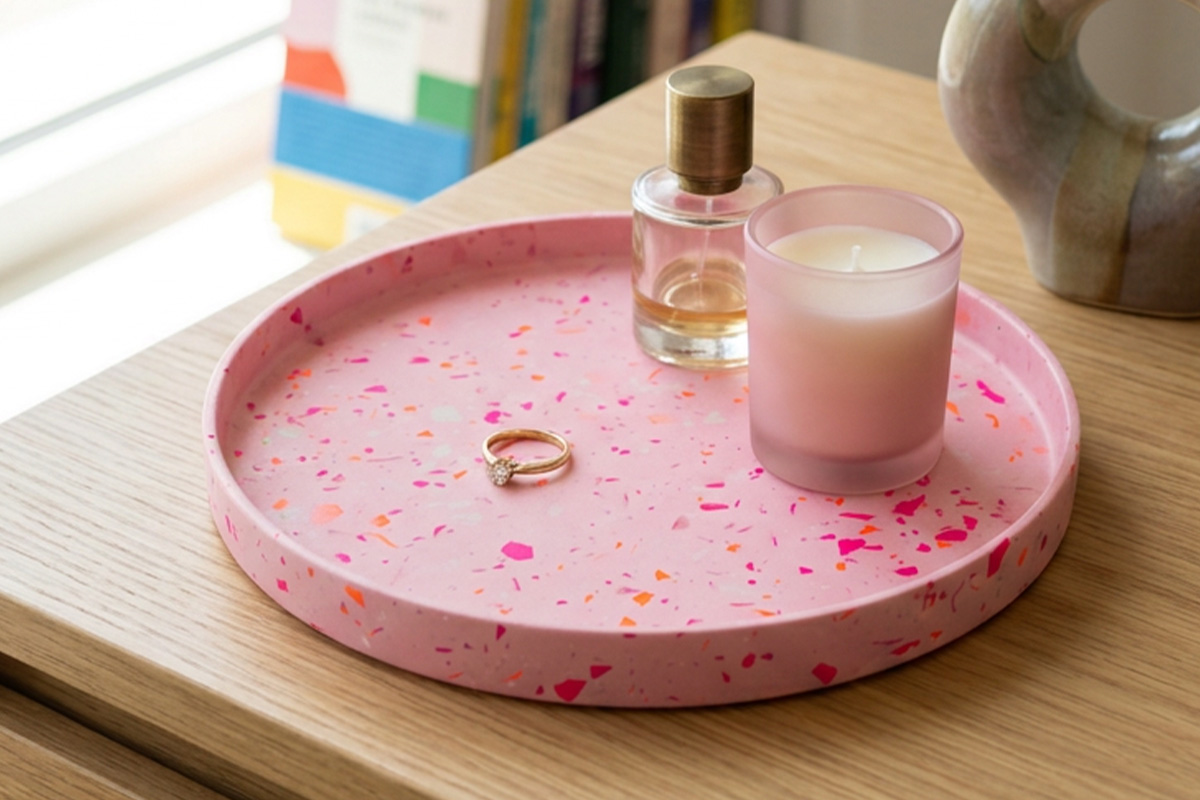
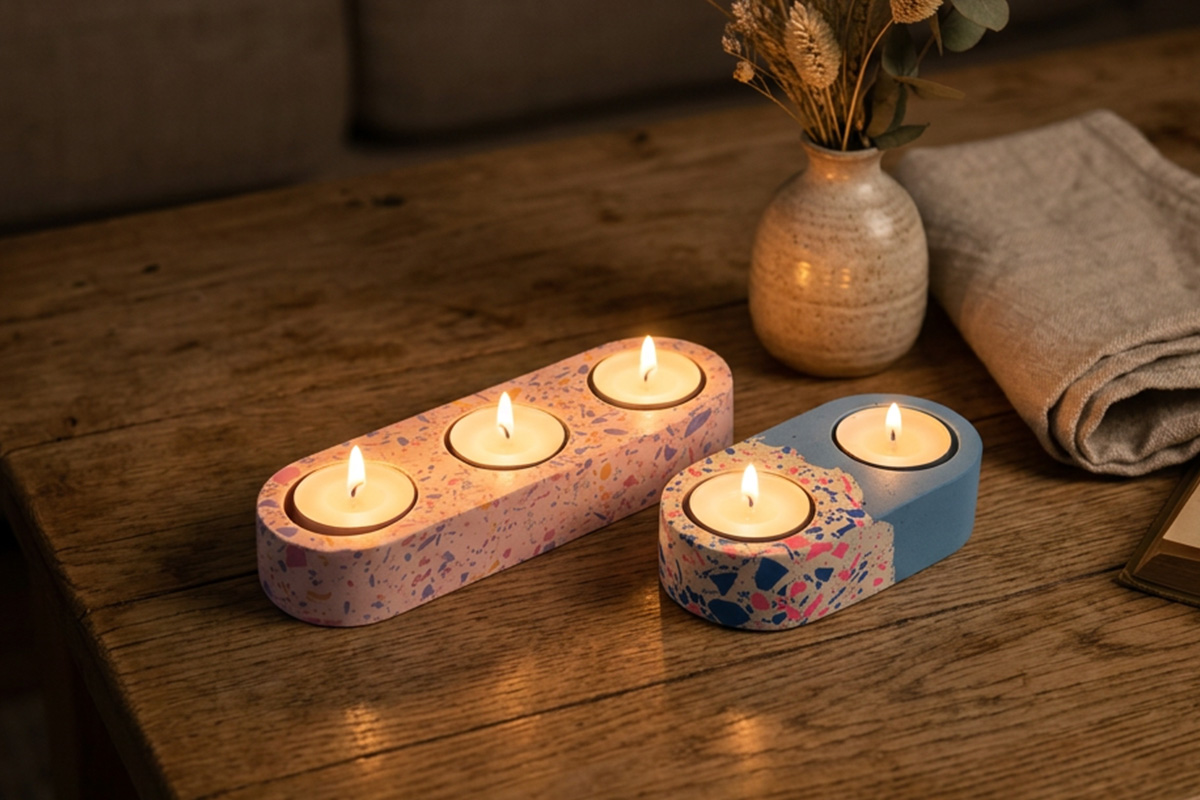
The speckled, confetti-like look of terrazzo is one of the most satisfying finishes you can cast at home, and Jesmonite® makes it wonderfully achievable. The short answer to how to make a Jesmonite® terrazzo effect: you make your own small Jesmonite® chips, fold them into a fresh, contrasting Jesmonite® mix, cast it, then sand the surface back so the chips show through. This guide walks you through every step, from making colourful chips to the final seal.
Terrazzo is a speckled surface built from small chips set into a contrasting base. Traditionally it used marble or stone fragments in cement for floors and worktops. In decorative casting you recreate the same idea at a smaller scale for coasters, trays and dishes.
The key thing to understand is that real terrazzo chips are something you make yourself from Jesmonite®. You cast a thin sheet, let it dry, and break it into small pieces. Those handmade chips are what give a genuine Jesmonite® terrazzo its character, and making a few colours means every piece comes out unique.
Jesmonite® AC100 is the usual choice for indoor decorative terrazzo. It’s a water-based variant made for interior casting, it takes pigment easily, and it sands beautifully. Because it’s water-based, you don’t need gloves to work with it, which makes it a forgiving place to start.
Gather everything before you mix. AC100 gives you a comfortable working window of about 10 to 15 minutes (a little less if the room is above 25 °C), so it helps to have your tools ready, there’s no need to rush, but a tidy bench keeps things relaxed:
A digital scale matters more than you’d think. Jesmonite® is mixed by weight, not by eye, so accurate measuring is the difference between a solid cast and a crumbly one. The mix ratio for AC100 is 1:2.5 (Jesmonite® liquid to base) by weight.
The chips give terrazzo its character, and they’re easy to make in advance. Here’s how:
Make several colours if you like, casting one thin sheet per colour. Keep your chips in small pots so you can grab a handful the moment your base is mixed. If you want ideas on which shades to combine, our colour guide is a good place to start.
Now for the main event. Work steadily, AC100 gives you time, so there’s no need to panic:
Because the chips are folded right through the mix, the terrazzo pattern shows no matter how far you sand back.
This is the step that transforms your piece, and timing matters.
Sand as soon as you demould, while the cast is still relatively soft and easy to work. Grinding back the top layer slices through the buried chips and exposes their cross-sections as crisp, colourful specks. Wrap your P150 sandpaper around a sanding block, wet it with a little water to keep the dust down, and work the surface in steady circular motions until the pattern is clear and even. For a near-polished feel, follow up with finer wet-and-dry grits.
Seal once the piece is fully cured, after 24 hours. Bare Jesmonite® is porous, so an acrylic sealer in satin or gloss is the right finish for AC100. Sealing brings the colours back out, sharpens the contrast between chips and base, and gives a smooth, professional, wipe-clean surface. Apply thin, even coats and let each one dry before the next, thin coats always beat one thick coat, which can go patchy.
Jesmonite® casts are rigid and hard-wearing once cured, so a well-sealed terrazzo coaster or tray will stand up to everyday use.
If you’d rather skip the chip-making step, there are two ready-made granulates that fold into a fresh Jesmonite® mix in exactly the same way. They give a terrazzo-like look with slightly more natural texture, though strictly speaking they aren’t terrazzo themselves.
StoneRoxx is real granite pieces. Being natural stone, they catch the light differently from the base and add genuine depth and texture.
GlassRoxx is a granulate made entirely from recycled glass, coloured with water-based pigments, so it brings colour and a subtle sparkle to a sustainable studio.
To use either, simply fold them into your mixed AC100 before pouring, then sand and seal as above. They’re a lovely alternative when you want the effect without making chips, but for a true Jesmonite® terrazzo, handmade chips are the way to go.
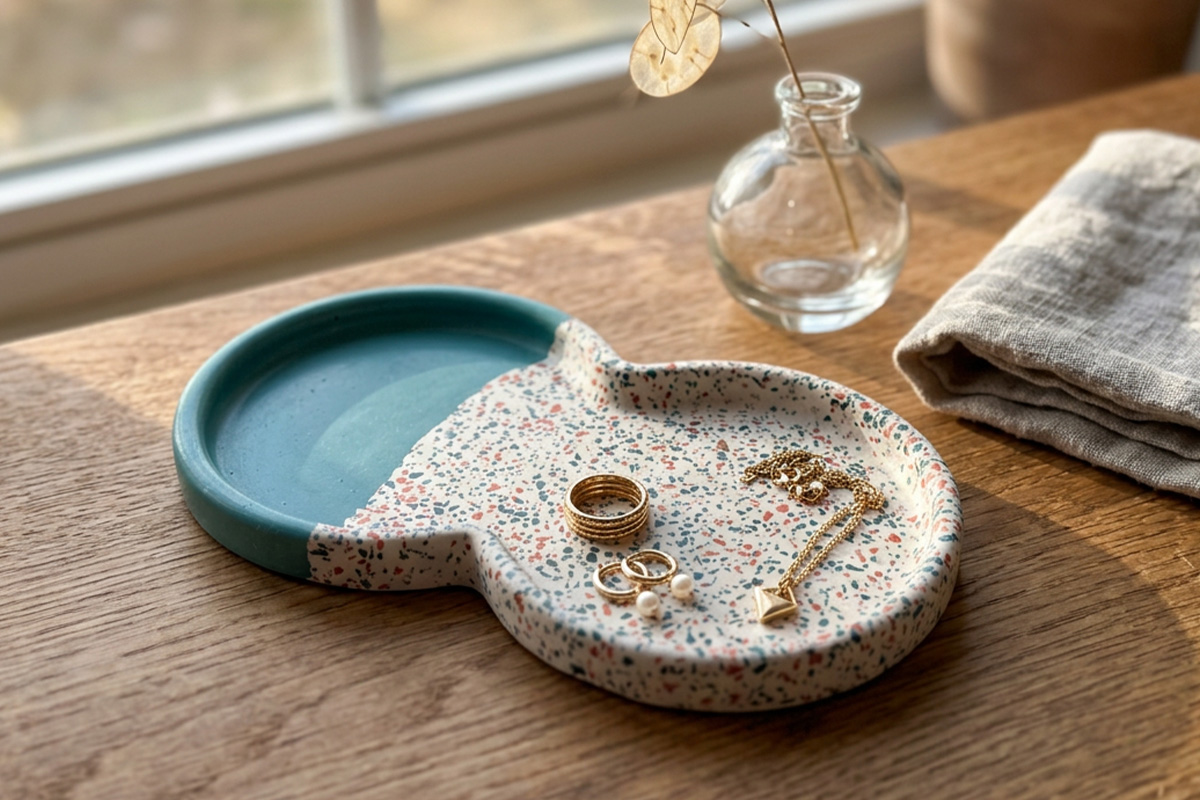
Terrazzo rewards experimenting. Cast a few thin sheets in different colours whenever you have Jesmonite® left over, and you’ll always have chips ready for your next piece.
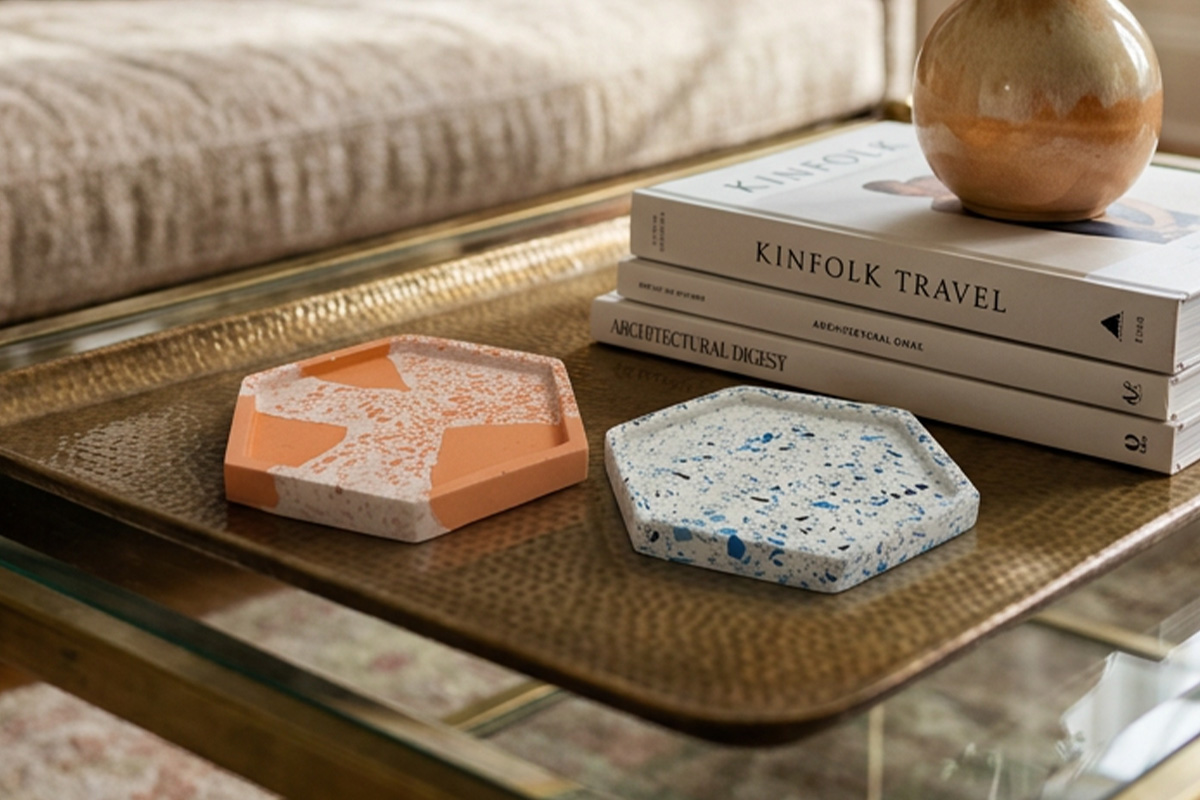
Ready to start? Explore Jesmonite® AC100, liquid pigments and silicone moulds, and you’ll have everything you need to make your first terrazzo piece this weekend.
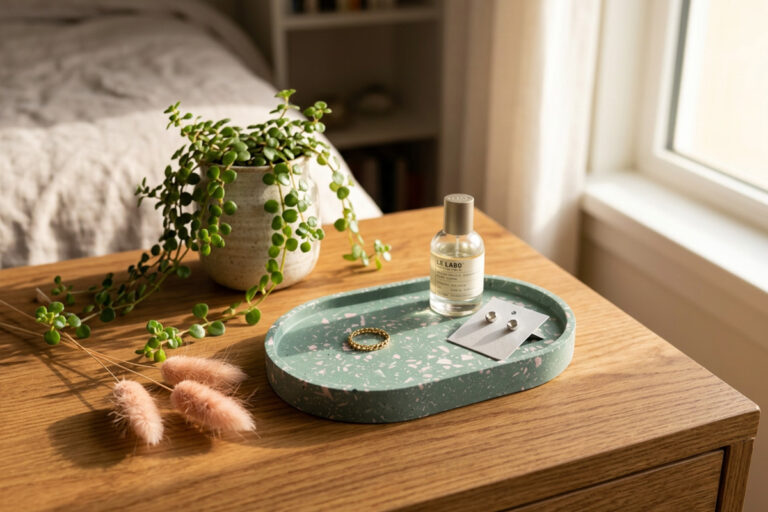
Everything from this guide in one basket: AC100 sets - 1750, with the recommended extras optional.


★★★★★ Rated Excellent on Trustpilot
Make your own chips first: mix a small batch of Jesmonite® AC100, add a little liquid pigment if you want colour, spread it in a thin layer on a silicone mat or sheet, let it dry for 20 to 30 minutes, then break it into small chips. Fold the chips into a fresh, contrasting AC100 mix, pour it into your mould, and let it set. Sand the surface back while the cast is still soft to reveal the chips, then seal it after 24 hours.
For true terrazzo, the chips are small pieces of Jesmonite® you cast yourself as a thin sheet and break up once dry. Making several colours gives the richest, most natural pattern. If you’d prefer not to make chips, StoneRoxx granite pieces and GlassRoxx recycled glass fold into the mix the same way for a terrazzo-like look.
Sand as soon as you demould, while the cast is still relatively soft and easy to work. AC100 can be demoulded after about 30 minutes. Sanding at this stage slices through the chips so their cross-sections show as crisp specks. Use P150 sandpaper on a sanding block, ideally wet, until the surface is even and the pattern is clear.
Yes. Bare Jesmonite® is porous, so sealing protects anything that will meet water or drinks, and it deepens the colours too. Wait until the piece is fully cured, after 24 hours, then apply an acrylic sealer in satin or gloss in thin, even coats. This is different from sanding, which you do straight after demoulding while the cast is still soft.
AC100 is the usual choice for indoor decorative terrazzo. It’s water-based, mixes at 1:2.5 (Jesmonite® liquid to base), sands well and takes pigment easily. The AC84 and AC730 variants (mixed at 1:5) are aimed at more heavy-duty and outdoor work, so for coasters, trays and dishes, AC100 is the one to reach for.
Lena turns raw casts into pieces you want on your shelf, and pins everything she makes. Part of the Gigacrea maker team.