


Nothing here yet. Every maker starts somewhere.
Pick a starter kit with everything for your first cast, or let the beginner guides walk you through it.
Shop the starter kits Read the beginner guides
 By Sofie Demeyer
·
4 min read
Beginner
By Sofie Demeyer
·
4 min read
Beginner
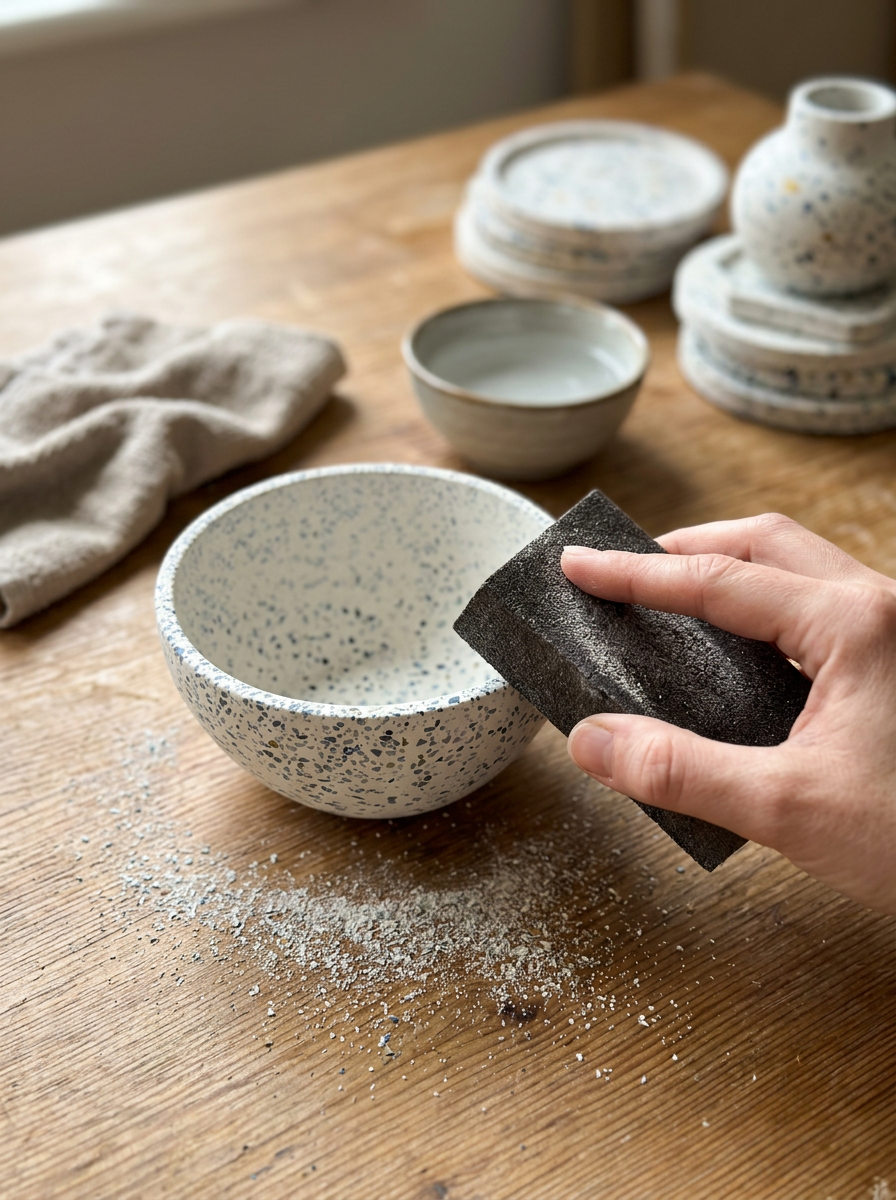
Sanding Jesmonite® isn’t about making it smoother. Your mould already gives you a smooth surface, so most casts need no sanding at all. You sand for two specific reasons: to reveal the pieces set into the cast – terrazzo chips, GlassRoxx and StoneRoxx – and to give the cement-based variants a robust, etched look. Here’s when to sand, when to skip it, and how to do it.
It’s a common misunderstanding: sanding doesn’t polish Jesmonite® to a smoother finish. It removes the thin top layer of the cast – which is exactly what you want when there’s something underneath to show. On a plain piece there’s nothing to reveal, so there’s no reason to sand.
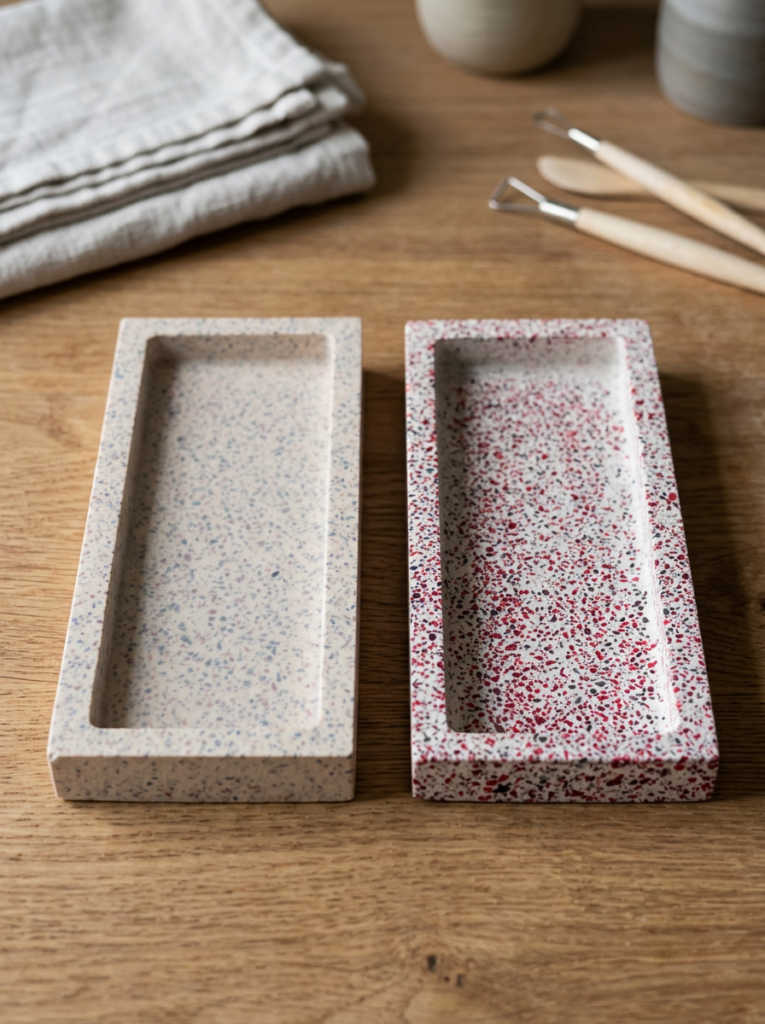
This is where sanding earns its place. Work the surface back until the chips and speckle sit flush and show clearly and evenly across the piece. Keep going until the pattern is as bold as you want it – the more you take off, the more comes through. (New to it? See our terrazzo effect guide.)
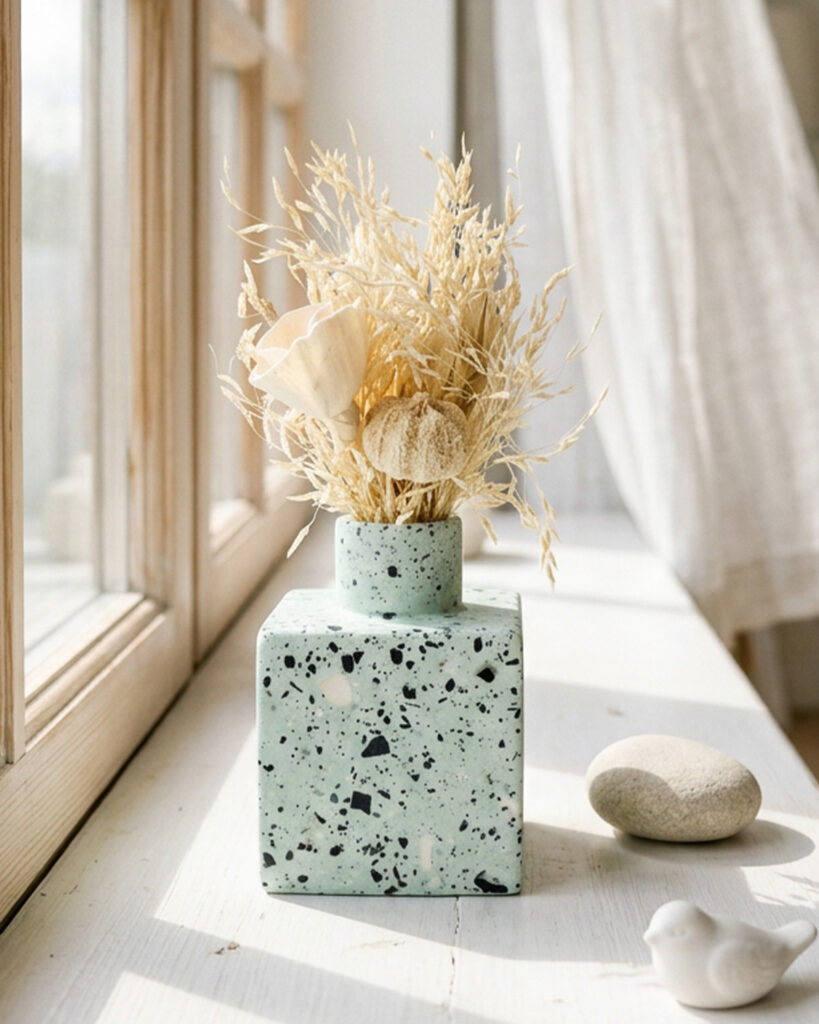
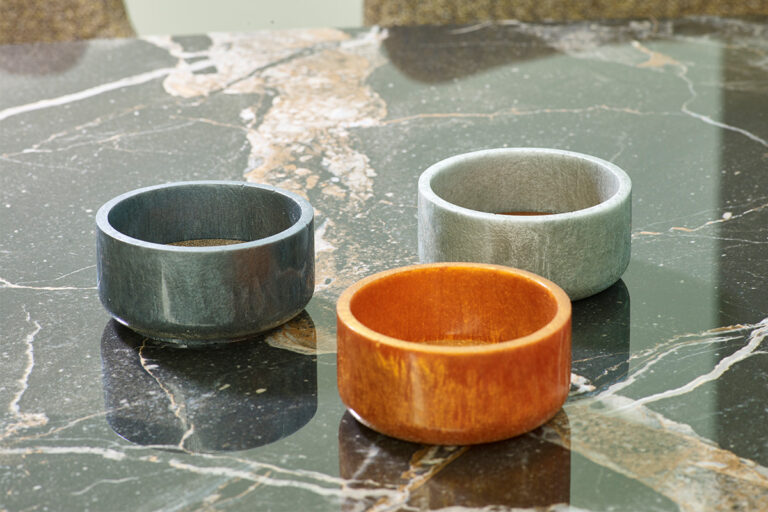
On the cement-based variants, sanding is a finish choice rather than a reveal. Take the surface back for a raw, stone-like texture – the more you sand, the more etched and rugged it looks. (You can get a similar effect by etching with acid or, more gently, household vinegar.)
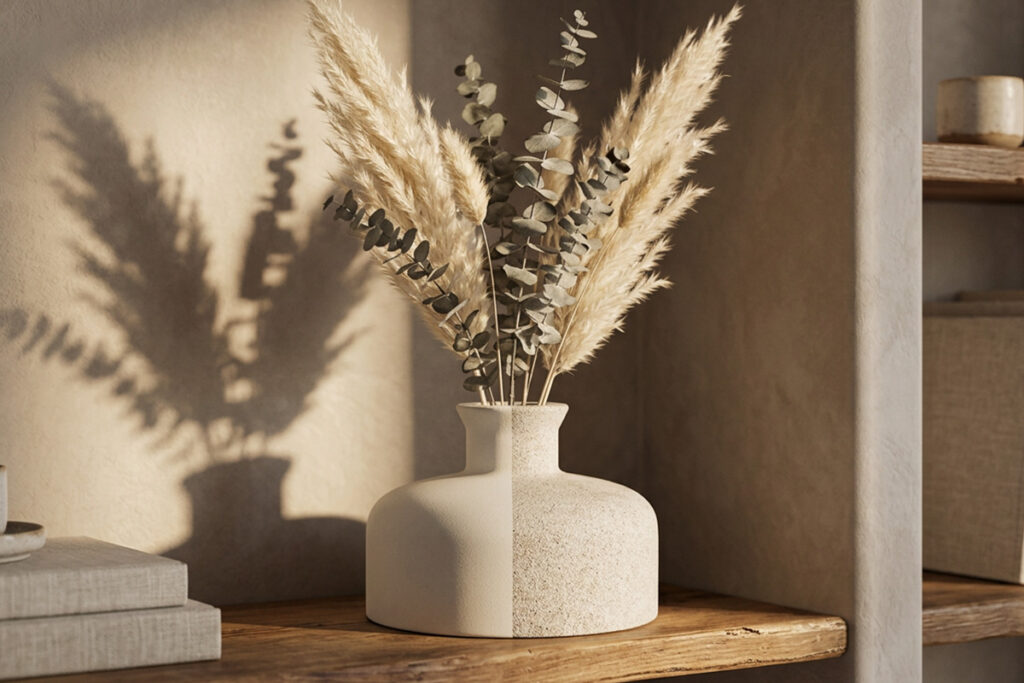
Whenever you do sand, do it as soon as possible after demoulding, while the cast is still relatively soft – fresh Jesmonite® sands far more easily than a piece that has fully cured (after about 24 hours).
Always work in small circular motions, and go from coarse to fine. Sanding sponges are ideal – they flex around curves and edges, and come in three grits:
For the etched look on AC730 or AC84, you can simply stop after the coarse P100 sponge.
Sanding a terrazzo, GlassRoxx or StoneRoxx piece leaves the surface looking a little dull – that’s normal. Once it’s fully cured (24 hours), add a coat of sealer: it brings the shine back to GlassRoxx and StoneRoxx and the colour and depth back into terrazzo, so the pieces really pop again.
Does sanding make Jesmonite® smoother? No – the mould already gives you a smooth surface. Sanding removes the top layer to reveal terrazzo, GlassRoxx or StoneRoxx underneath, or to give the cement-based variants an etched look.
Do I need to sand a plain piece? Usually not – just a quick pass on the bottom so it sits level. Save your sanding for pieces with something to reveal.
Can I sand out an air bubble? Small surface bubbles, yes. For deeper holes, fill them with a little fresh Jesmonite®, let it set, then sand back.
From base and liquid to GlassRoxx, StoneRoxx, sanding pads and sealers, it’s all on GigaCrea.
Sofie knows every Jesmonite variant, ratio and fix. If a cast can go wrong, she's un-wronged it. Part of the Gigacrea maker team.