Nothing here yet. Every maker starts somewhere.
Pick a starter kit with everything for your first cast, or let the beginner guides walk you through it.
Shop the starter kits Read the beginner guides
Eco-creative materials · water-based · no smell
A starter kit brings everything in one box: both bottles (liquid and base), 2 pigments, a mould, stirring sticks and a printed manual. Prefer to pick your own? Choose a starter set (liquid + base) and add the pigments and mould you like. Either way: no studio, no extraction, no experience — weigh, mix, pour, demould in 40 minutes.

Official Jesmonite® distributor
Two bottles, water-based, solvent-free and safe on your kitchen table. The only real decision is where your piece will live.
Indoors
In & outdoors
Outdoors & architectural
01 · The material
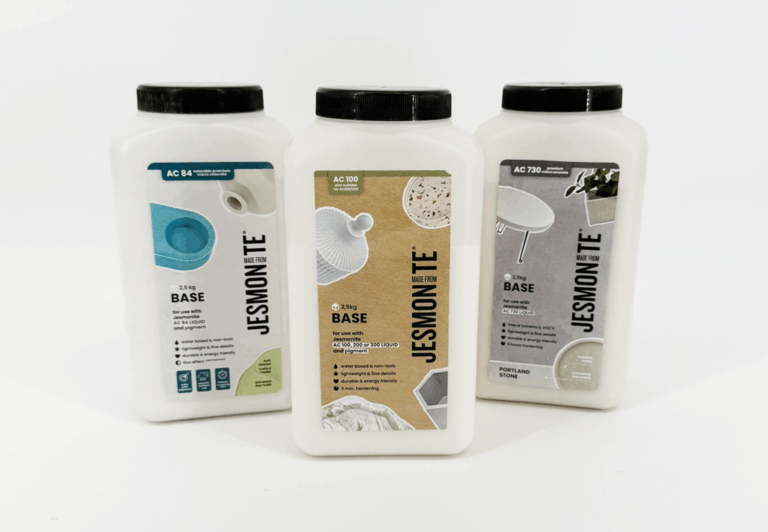
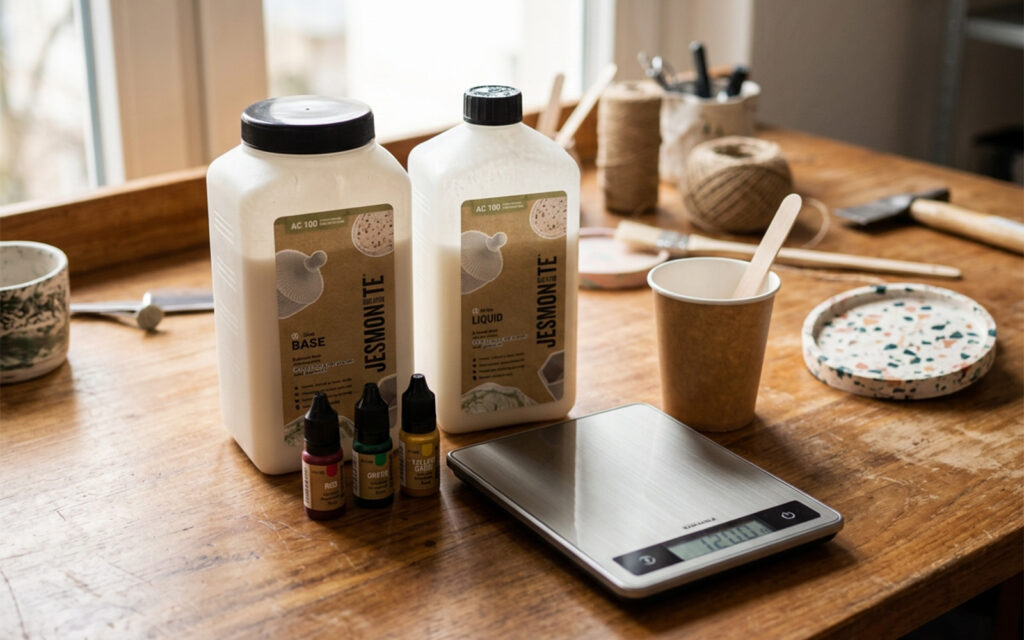
Jesmonite® is a water-based composite. You get a bottle of liquid and a bottle of base. Weigh the liquid into your mixing cup, weigh the base into the same cup, stir, and pour into a silicone mould. You demould the same afternoon.
It gives you the weight and matte mineral finish of stone or concrete without solvents, fumes or a workshop. Designers use it for homeware, jewellery and art all the way up to architectural detail — and it takes pigment beautifully, so no two pieces need to look alike.
02 · The look
Same base material, four completely different results. Choose one and we'll list exactly what goes in the basket.
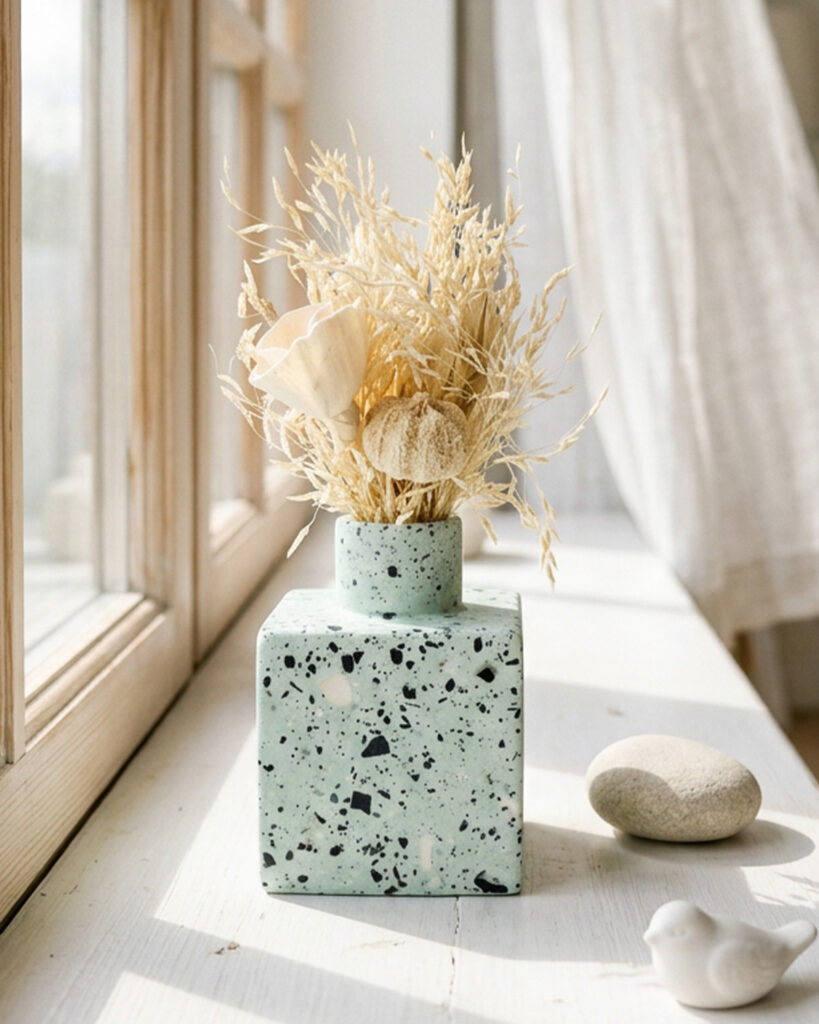
Chips suspended in a coloured base — the signature Jesmonite® look. You sand the cured piece back to bring the speckle to the surface, so many makers try a solid colour or a marble first and come to terrazzo once they're comfortable. Terrazzo is AC100 only.
How to make the terrazzo effect →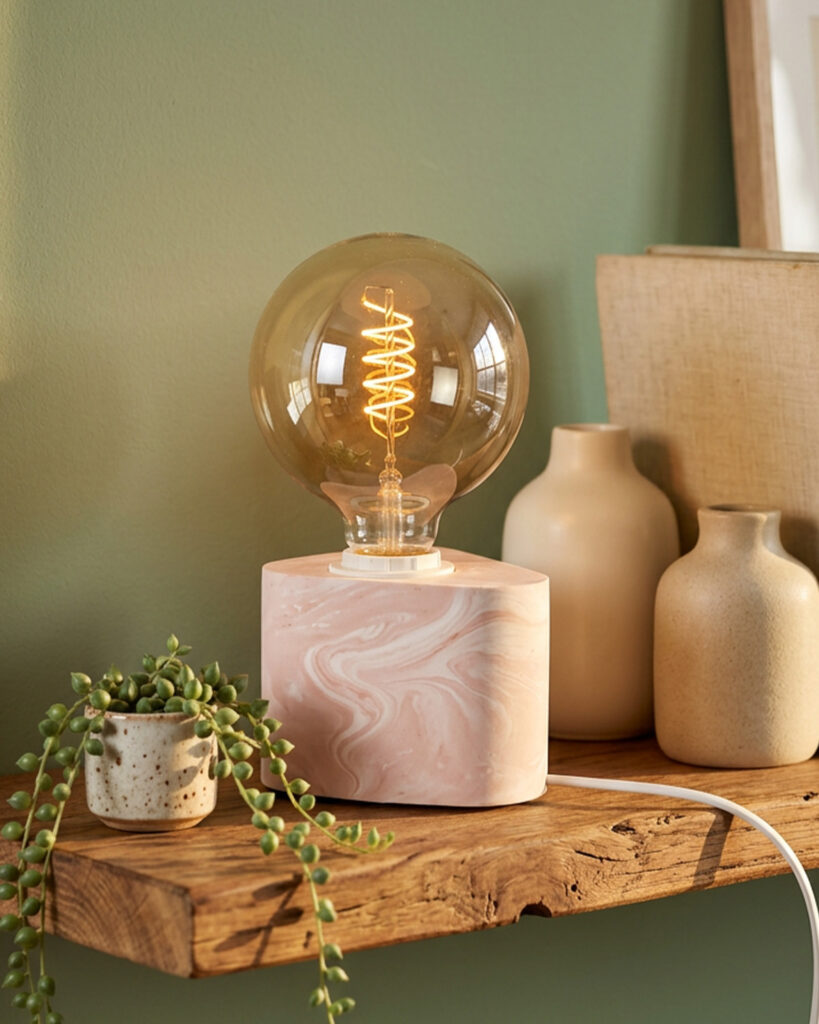
One pigment or several, folded through just once so the veins stay defined — no two pieces are ever the same, a beautiful unique effect. Marbling looks far more advanced than it is; the only trick is don't over-mix. How you add the colour depends on the colourant:
Pour and let the veins settle. For a swirl finish, drizzle two or three colours into the mould in ribbons and give one gentle twist. Every pour is a little different — that's the charm.
What you need
How to colour & marble Jesmonite® →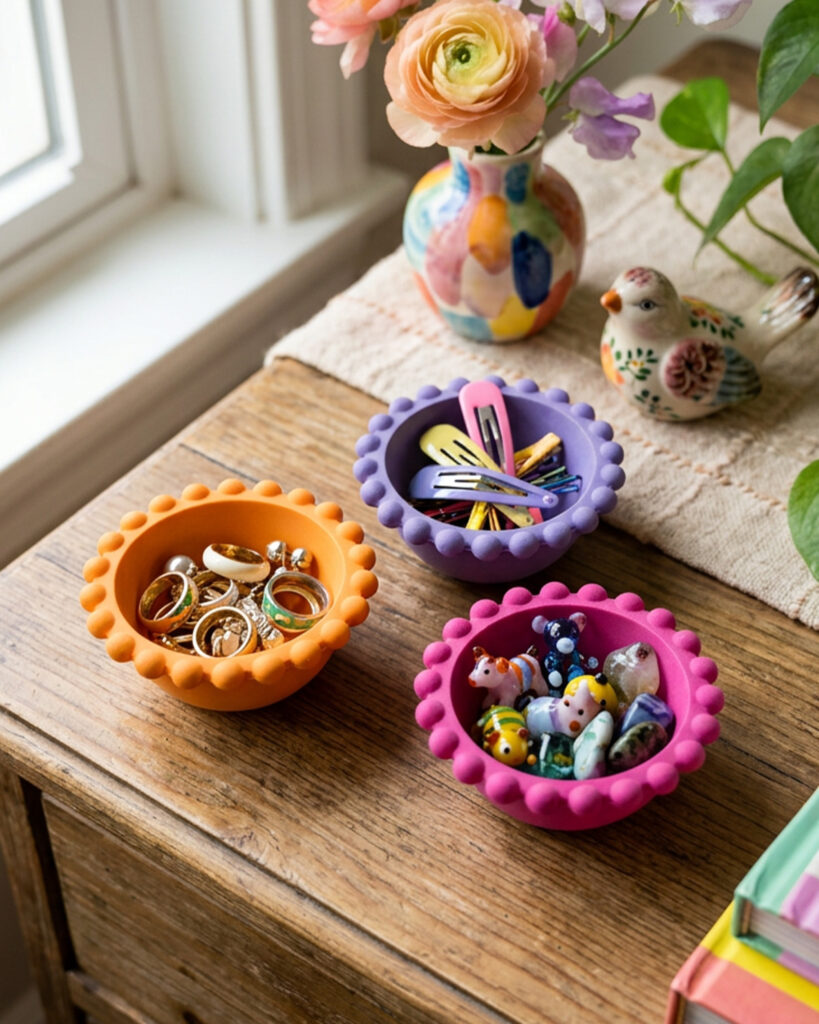
One pigment, evenly mixed. The calmest, most contemporary result and the easiest to repeat across a set of coasters or vases.
How to colour Jesmonite® →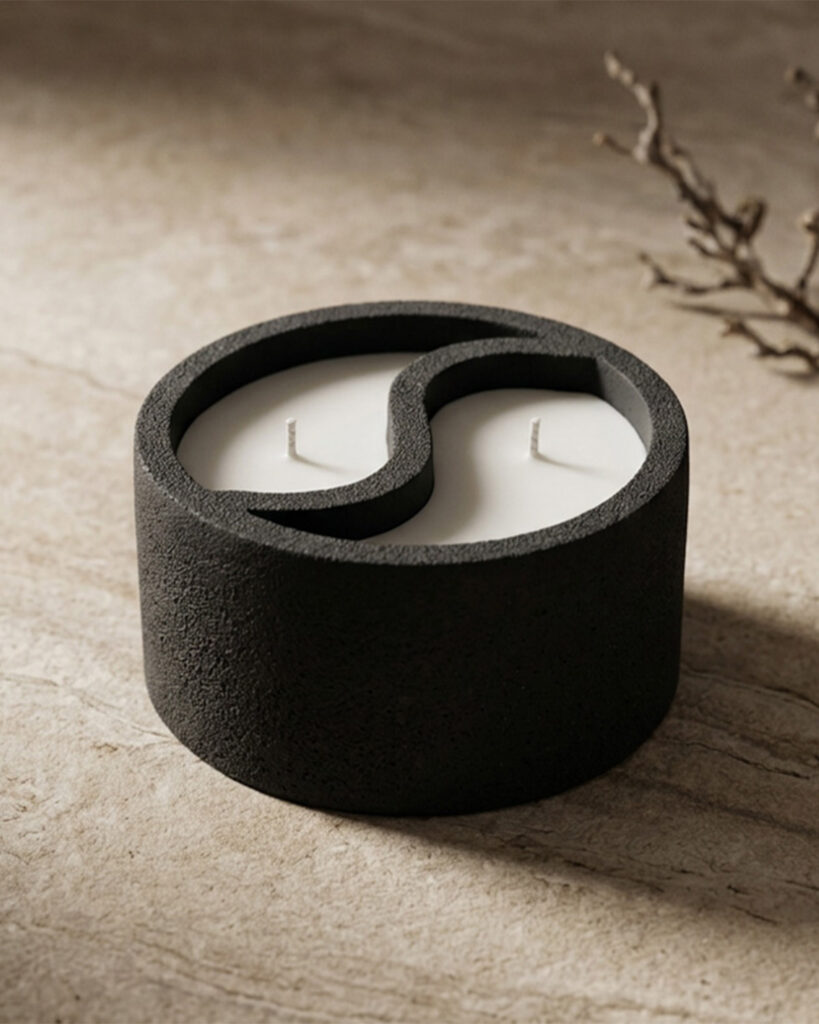
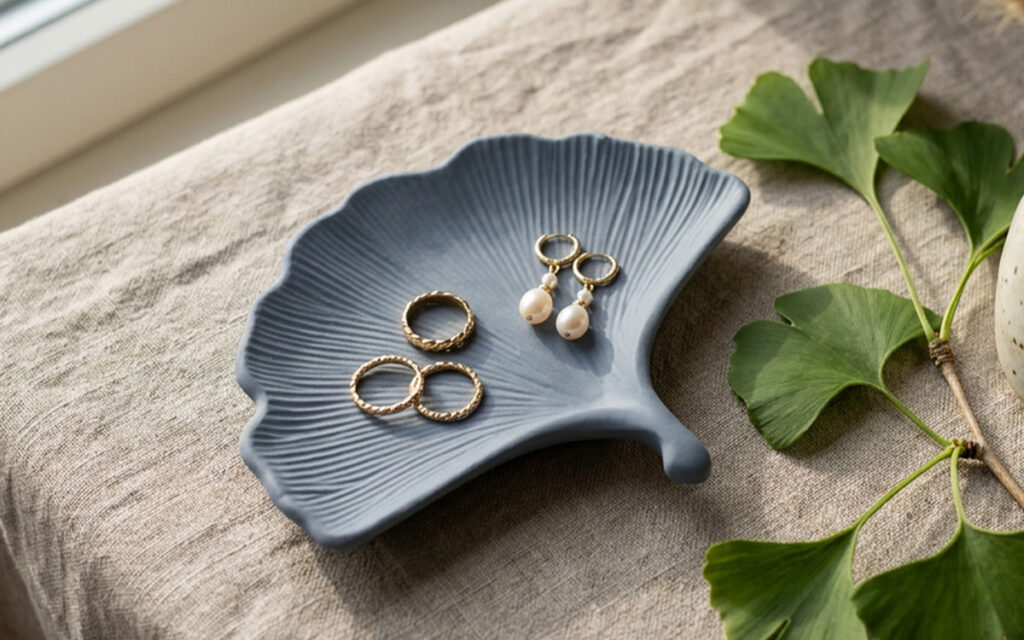
Cast in AC84 or AC730, then etch with acid or vinegar for a raw, quarried surface. Weather-resistant, so it can go outdoors.
Which outdoor line: AC84 vs AC730 →03 · The choice
One question decides it: where will the piece live, and how experienced are you?
Read the full AC100 vs AC84 vs AC730 guide →
Indoor decorative objects and home accessories. The most popular line, and the one nearly every guide is written for.
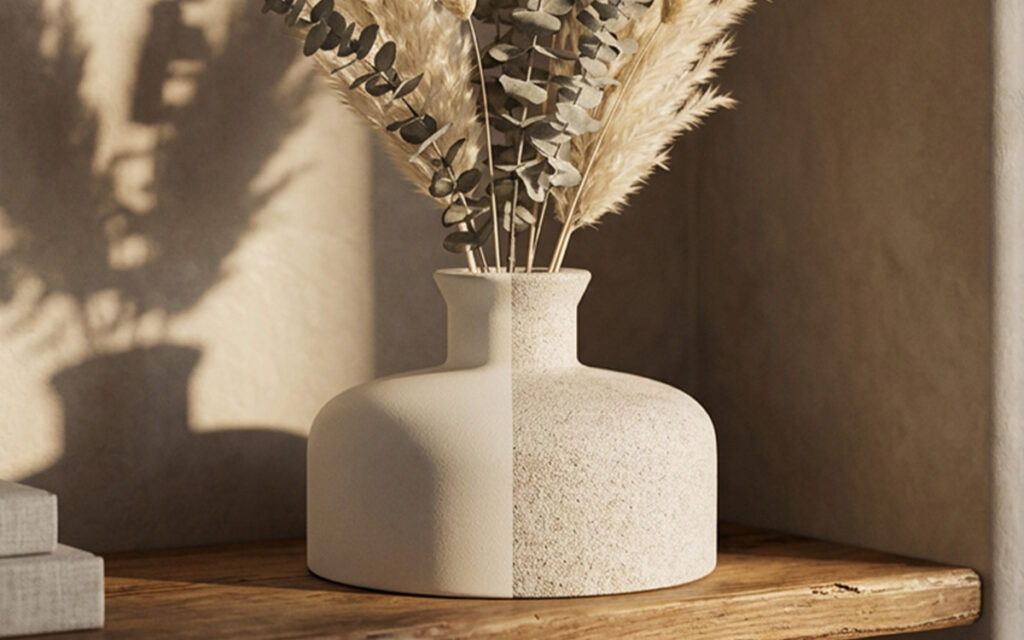
Small objects for indoors and out. Smooth straight from the mould like AC100, or etched with vinegar or acid for a concrete look.
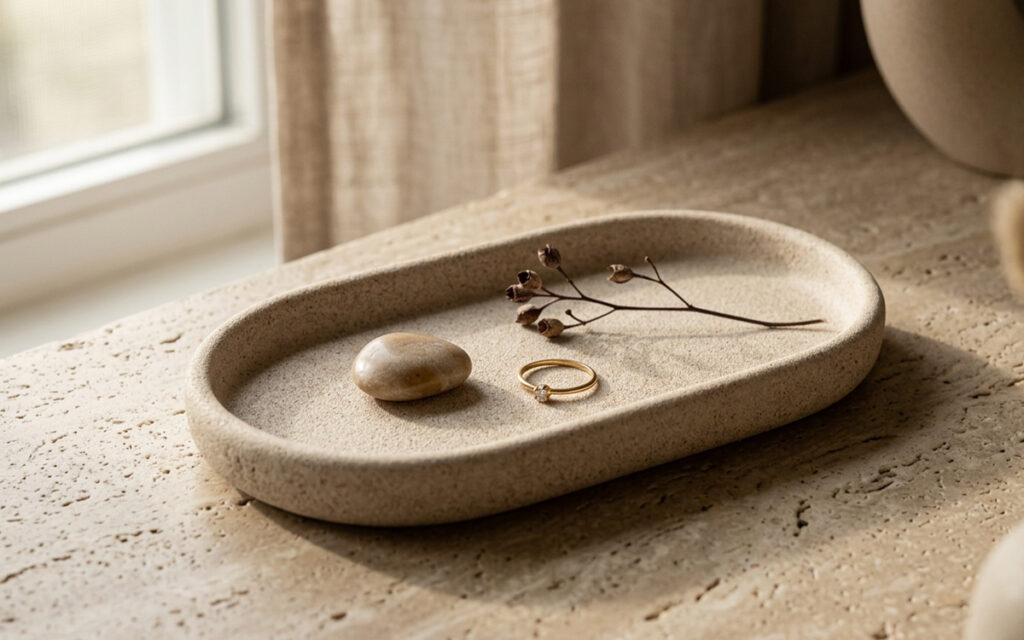
Cement-based and stone-like, for durable outdoor pieces and architectural detail. Thicker mix — not a first project.
04 · The maths
Enter your mould’s water weight and get the exact Jesmonite® liquid and base to mix. Only have a set amount of liquid or base? Type that instead — the other fields fill in automatically.
Fill in any field — the other two update automatically.
Your recipe
For %N% pieces: %L% liquid + %B% base (%T% total mix).
Weigh the liquid into your cup first, then the base into the same cup.
05 · The process
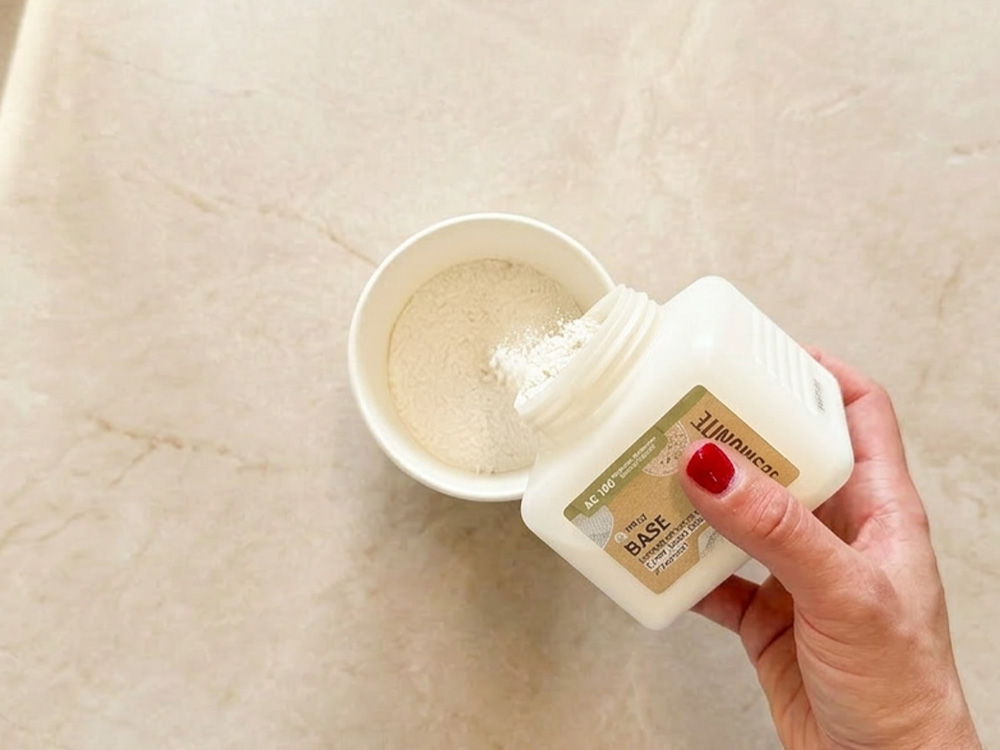
Mixing cup on the scale, tare, pour in the liquid to the gram — then weigh the base into that same cup.
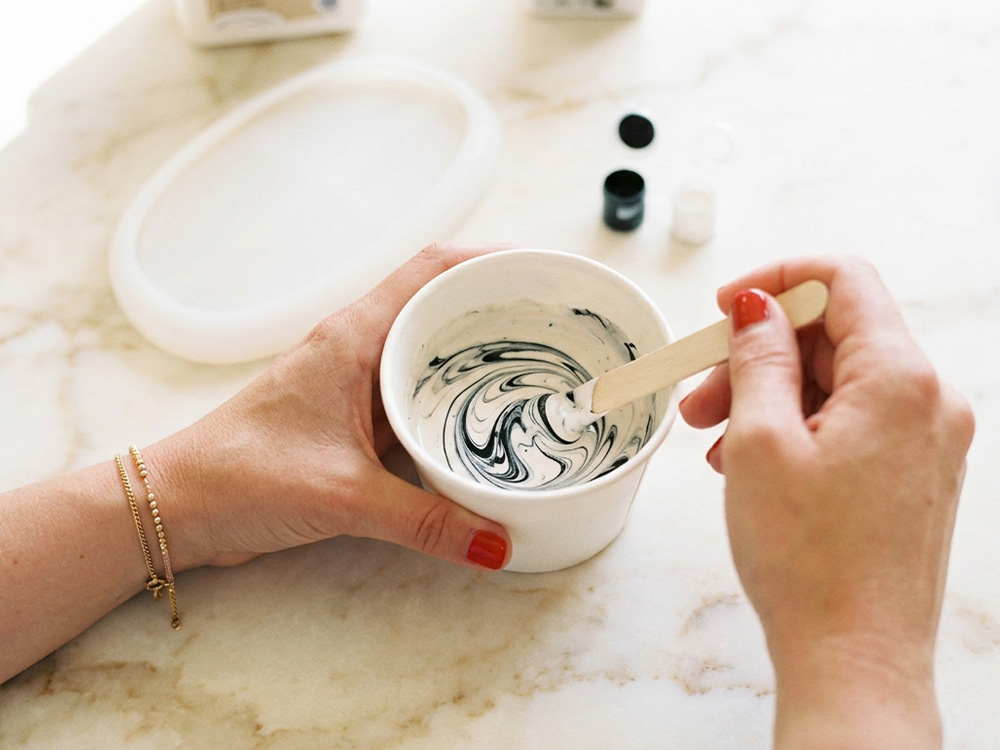
Two minutes to a lump-free batter. Add pigment, GlassRoxx or terrazzo chips now — stir it all the way through for a full, even colour, or swirl just a few times for a marbled effect.
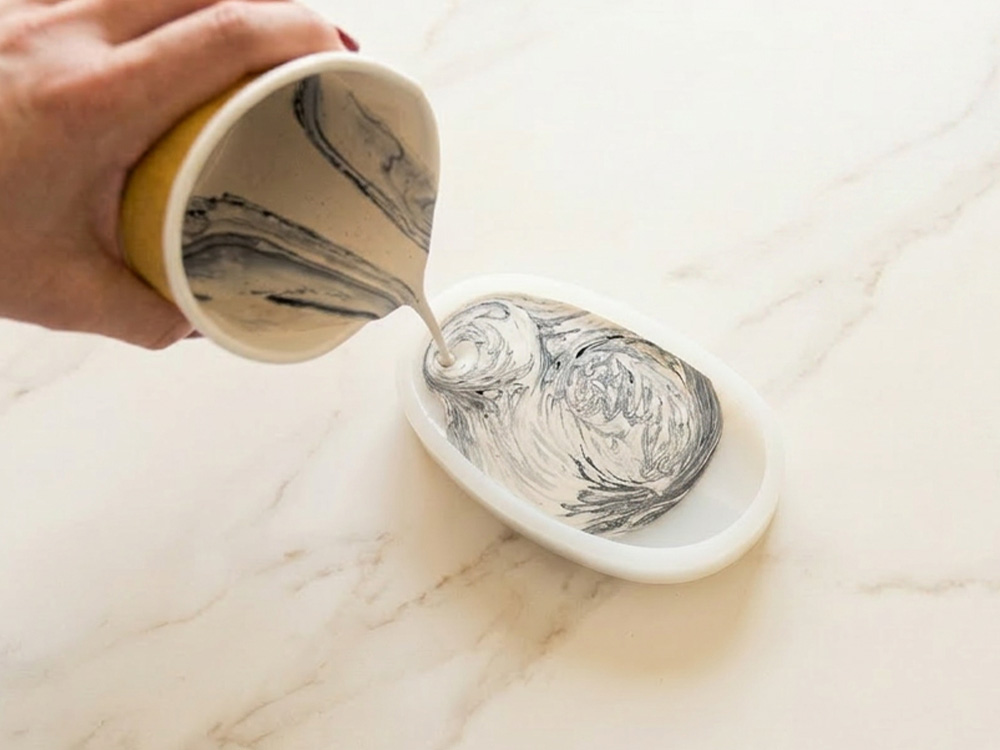
Fill the silicone mould, then tap the mould itself to bring trapped air bubbles to the surface.
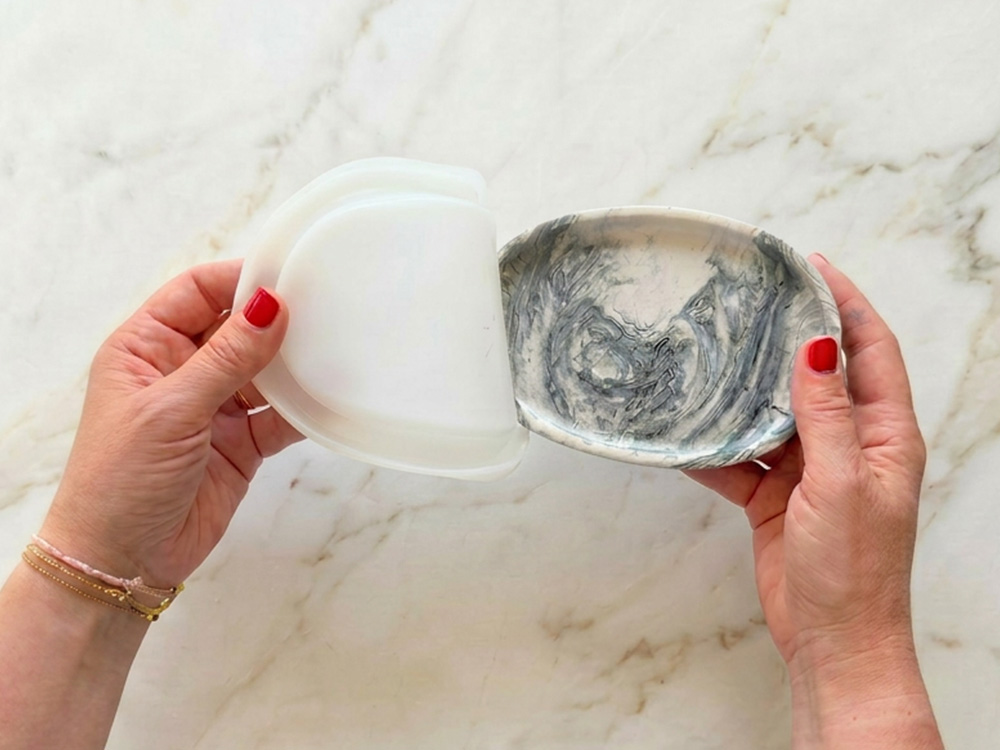
Demould when it's ready — about 30–40 min for AC100, 2 h for AC84, 4 h for AC730. Sand the edge, then seal once fully cured (24 h) and your piece is waterproof and stain-resistant.
06 · Start here
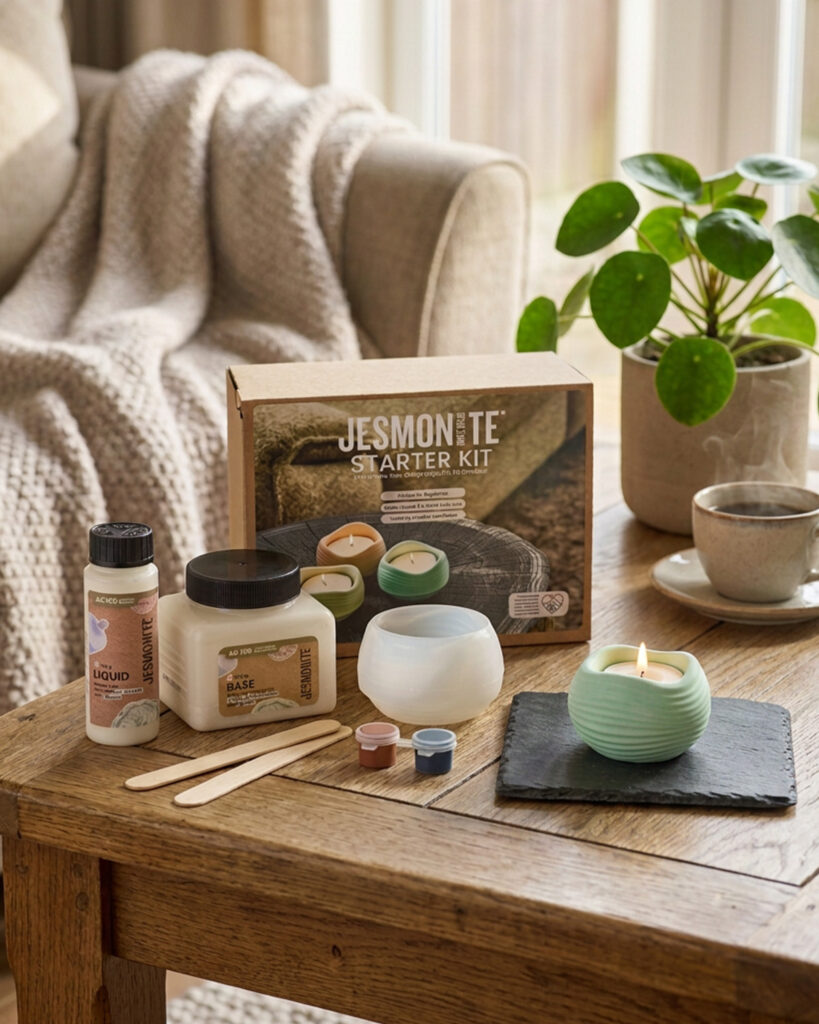
You will also need a kitchen scale that reads in grams and a mixing cup. Prefer a different mould shape? You can also buy the starter set (liquid + base) with your own pigments and silicone mould instead.
08 · Objections
Answered here so nobody has to leave the page to find out.
Water-based, solvent-free, and simple enough for a first attempt. Two bottles, a scale and the manual in the box — you'll have a finished piece before dinner.