
Nothing here yet. Every maker starts somewhere.
Pick a starter kit with everything for your first cast, or let the beginner guides walk you through it.
Shop the starter kits Read the beginner guides
 By Sofie Demeyer
·
7 min read
Beginner
By Sofie Demeyer
·
7 min read
Beginner
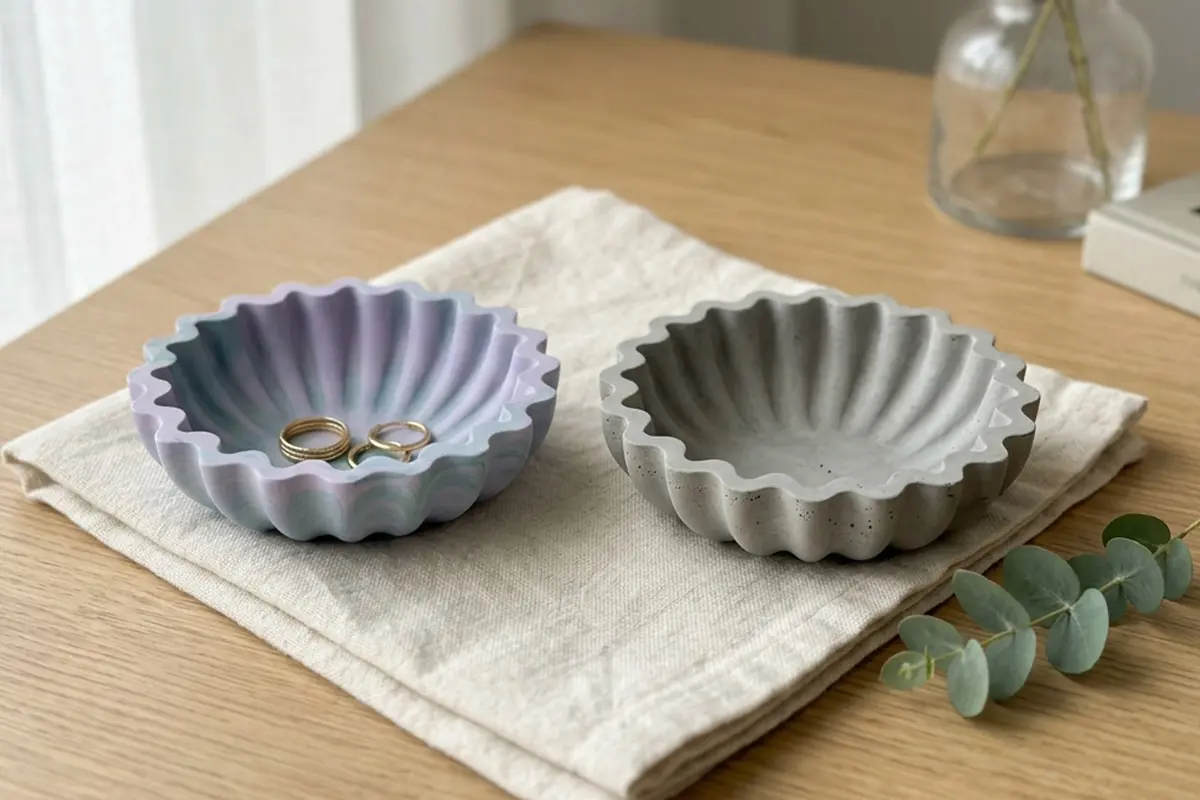
If you make homeware, coasters, trays or planters, you have probably weighed up Jesmonite® vs concrete and wondered which one is actually better. The honest answer is that it depends on the piece. This guide compares the two fairly on weight, detail, cure time, durability and sustainability, so you can pick the right material for the project in front of you.
 Jesmonite sealers satin - 50recommended
Small satin sealer, protects against water and daily use
€ 9,99
Add
Jesmonite sealers satin - 50recommended
Small satin sealer, protects against water and daily use
€ 9,99
Add
Concrete is dense and heavy. A solid concrete tray or planter has real mass, which is part of its appeal outdoors, where weight keeps a pot from blowing over. Indoors, that same mass can make a coaster feel like a paperweight and a tray awkward to lift.
Jesmonite® is noticeably lighter for the same shape because it is an acrylic-mineral composite rather than a solid lump of stone aggregate. You simply pour it into the mould, and the finished piece still comes out easier to carry, hang and post than the concrete equivalent. Strength is a fairer fight than the weight suggests: Jesmonite® is impact-resistant and, in its cement-modified forms, genuinely rugged. Plain concrete can be more brittle at thin edges and prone to chipping, whereas the acrylic in Jesmonite® makes it tougher and less likely to chip.
For everyday homeware you want to pick up and move, lighter usually wins. For a large statement planter that should stay put, the heft of concrete or a heavier Jesmonite® AC730 cast is an advantage rather than a drawback.
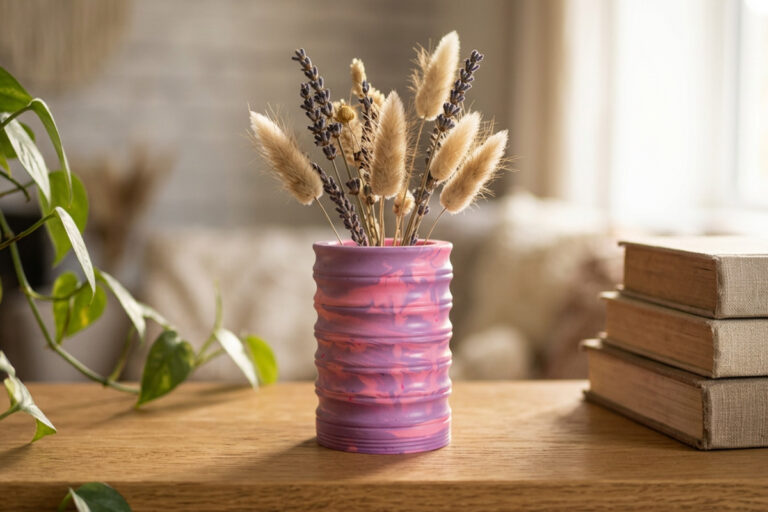
This is where Jesmonite® pulls ahead for decorative work. Because it is a fine, pourable variant, it captures crisp edges, fine texture and the smallest details of a silicone mould. Ribs, facets, lettering and delicate terrazzo chips all come out sharp. The surface is smooth and even, and it takes pigment and sealers cleanly.
Concrete can look wonderful, but standard mixes contain sand and aggregate that leave a coarser, more open surface, along with the odd air pocket. That raw, industrial texture is a look in its own right, and many makers love it. What concrete struggles with is fine detail: sharp corners and thin sections are harder to achieve without a specialist fine-cast mix, and small features can come out soft or crumbly.
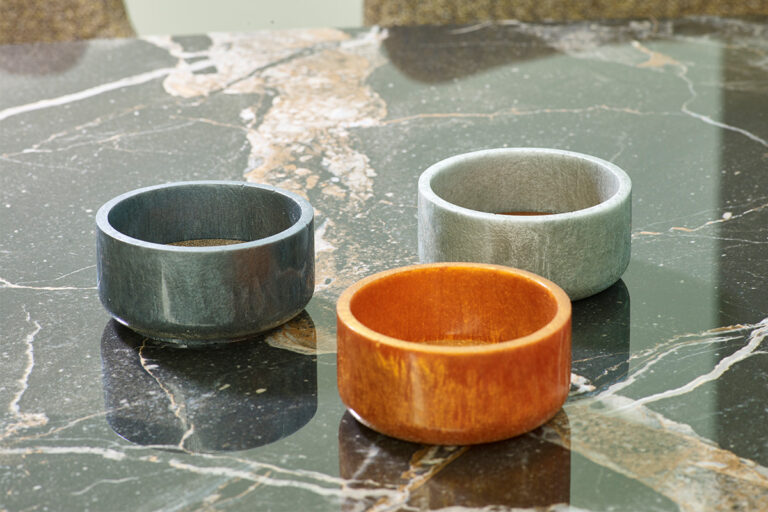
Colour behaves differently too. Jesmonite® is opaque and usually pigmented right through the mix, so the colour is solid and consistent inside and out. Concrete is more often surface-stained or dyed, and results can be patchier. If you want pastel palettes, bold neons or a clean terrazzo, Jesmonite® and a good set of liquid pigments give you far more control.
Speed is a big practical difference. Jesmonite® AC100 demoulds after around 30 minutes, then keeps getting stronger and is fully cured after 24 hours. That means you can pour in the morning, unmould before lunch and reuse the same mould again the same day. For anyone making a small batch, that quick turnaround is a genuine pleasure.
Concrete is a waiting game. It needs far longer in the mould before it is safe to demould, and it reaches full strength over days rather than minutes. It also has to cure slowly and stay damp to avoid cracking, so it demands patience and a bit of aftercare.
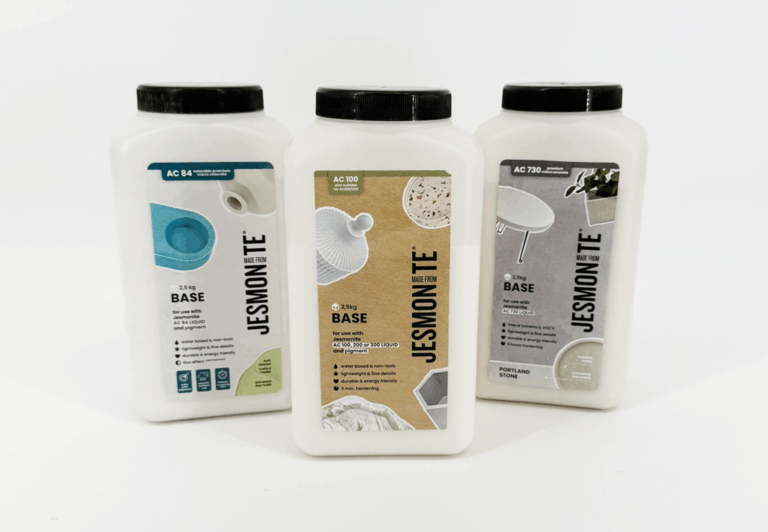
Ease of use tips the same way. Jesmonite® AC100 is water-based, non-toxic and free of solvents and VOCs, which makes it a friendly choice for a kitchen table. The mix is simple: 1 part Jesmonite® liquid to 2.5 parts base powder by weight, and accurate weighing is what gives a reliable set. For quantities, most of our own mould product descriptions list the amount you need, or you can use an online Jesmonite® calculator or the Jesmonite® app; our guide on how much Jesmonite® you need walks through it. Concrete mixing is dustier and messier, the ratios are less forgiving, and cleanup is heavier work. If you are starting out, an AC100 starter kit gets you pouring quickly without buying bags of cement you may never finish.
Concrete’s home turf is outdoors. It is rugged, weather-tolerant and cheap enough to make big, so for a heavy garden planter or a paving-style piece it is hard to beat on raw toughness and cost per kilo.
Jesmonite® covers both, but you have to pick the right formulation. AC100 is made for indoor decorative casting and is not intended to live outside. For anything that faces the weather, reach for AC730 or AC84, both of which are suitable indoors and outdoors. Jesmonite® is porous, so any outdoor piece must be sealed with a penetrating sealer, which gives invisible water protection without changing the look. If you are casting a planter for live plants, add drainage so the material is not sitting in wet soil, and browse the dedicated silicone moulds to find a shape built for the job.
Rule of thumb: indoor homeware, choose Jesmonite® AC100. Outdoor and rugged, choose concrete or Jesmonite® AC730 or AC84 and seal it well.
Neither material is perfect, but there are real differences. Concrete has a heavy environmental footprint because cement production is energy-intensive and a significant source of carbon emissions. It is also difficult to make in small, low-waste quantities at home without a lot of leftover mixed material going hard in a bucket.
Jesmonite® is the eco-friendlier option overall. It is water-based, and it is kinder than plaster, concrete and epoxy. The AC100 variant is non-toxic and solvent and VOC-free, so there is nothing nasty going into the air of your workspace. Because you mix small batches to order and use far less material per piece, there tends to be less waste as well. If sustainability is high on your list, Jesmonite® is the easier material to feel good about.
Here is the short, practical version for the three things makers ask about most.
In most homeware situations, Jesmonite® is the more practical and better-looking choice, while concrete earns its place when a piece needs to be big, heavy, cheap in bulk and left outside.
Ready to make your first piece? Browse the full Jesmonite® range to compare AC100 for indoor homeware and AC730 for outdoor projects, or start with an AC100 starter kit and pour your first coaster or tray this week.
Everything from this guide in one basket: AC100 sets - 3500, with the recommended extras optional.

★★★★★ Rated Excellent on Trustpilot
They are strong in different ways. Concrete has more compressive mass and toughness in bulk, which is why it suits heavy outdoor pieces. Jesmonite® is impact-resistant and less brittle at thin edges thanks to its acrylic content, and its cement-modified AC730 is genuinely rugged. For thin, detailed homeware, Jesmonite® is usually the more durable choice; for a massive outdoor slab, concrete is hard to beat.
Yes, but only the right formulation. AC100 is for indoor use, so for outdoor pieces choose AC730 or AC84, which are both suitable indoors and outdoors. Jesmonite® is porous, so any outdoor piece must be sealed with a penetrating sealer for invisible water protection. For a planter, add drainage for live plants.
Concrete is cheaper per kilogram in bulk, which is why it wins for large outdoor pieces. Jesmonite® costs more by weight but you use less of it per piece, since it is lighter than concrete for the same object, and there is less waste from small batches. For small decorative homeware the price difference is modest, and Jesmonite®’s speed, finish and ease often make it the better value.
Jesmonite®, comfortably. AC100 is water-based, non-toxic and solvent-free, mixes with simple kitchen scales and demoulds after around 30 minutes, so you see results fast. Concrete is dustier, slower to cure and less forgiving with ratios. An AC100 starter kit is the simplest way to make your first piece without committing to bags of cement.
Sofie knows every Jesmonite variant, ratio and fix. If a cast can go wrong, she's un-wronged it. Part of the Gigacrea maker team.