Nothing here yet. Every maker starts somewhere.
Pick a starter kit with everything for your first cast, or let the beginner guides walk you through it.
Shop the starter kits Read the beginner guides
 By Lena Verhoeven
·
7 min read
Beginner
By Lena Verhoeven
·
7 min read
Beginner
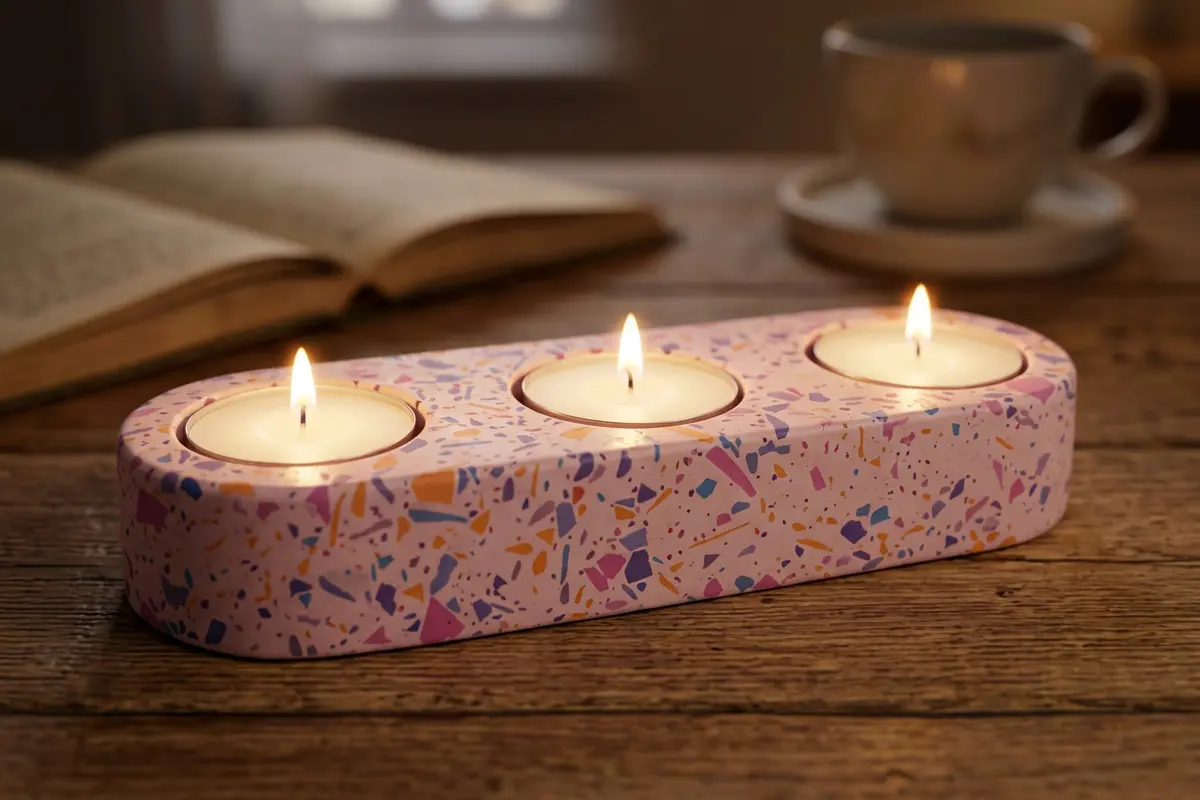
Jesmonite® candle holders are one of the most popular first casting projects, and they make a lovely handmade gift. They come together fast, need only a little material, and let you play with colour and texture. In this guide you’ll learn whether Jesmonite® is safe around flames, how to pick a mould, and exactly how to cast a holder step by step.
 Jesmonite sealers satin - 50recommended
Small satin sealer, protects against water and daily use
€ 9,99
Add
Jesmonite sealers satin - 50recommended
Small satin sealer, protects against water and daily use
€ 9,99
Add
Yes. Cured Jesmonite® base products (Jesmonite® base plus Jesmonite® liquid) are tested to withstand high temperatures and won’t melt, which makes them a genuinely good choice for candle holders and tealight holders, unlike many resins or waxed finishes. Note that this applies to the base material only, not to sealers, which are not fire-tested.
There is one rule that matters more than any other: a real flame should never sit directly against the Jesmonite® surface, and it should never touch decorative extras like dried flowers, glitter or inclusions. Always drop a proper metal or glass insert into the holder for a live flame, and keep the flame well clear of anything decorative. The insert catches drips, contains the heat, and keeps your piece looking good for years. Because sealers are not fire-tested, leave any surface a flame could reach unsealed; sealing such a surface is at your own risk.
The shape you pour into decides the whole look, so start there. Browse the dedicated candle holder moulds for shapes designed specifically for tealights and pillars. Many have a recess sized for a standard metal tealight cup, which saves you a lot of fiddling later.
If you want a wider selection or a matching set, the full mould collection includes trays, coasters and vases you can cast in the same colourway. Silicone moulds release cleanly and reproduce fine detail, which is exactly what you want for crisp edges on a small piece.
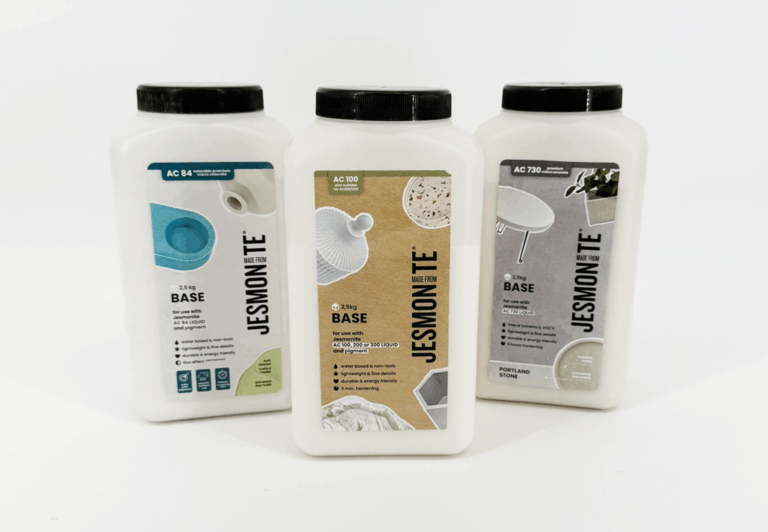
If this is your first pour, an AC100 starter kit bundles the Jesmonite® base, Jesmonite® liquid and the basics in matched quantities so you don’t have to guess.
If a result comes out soft, chalky or sticky, it’s almost always the mix ratio or inaccurate scales. Too much Jesmonite® liquid gives a chalky cast; too little sets thick and fast. Weigh carefully and stick to the 1:2.5 ratio.
The candle type decides the insert, and the insert keeps everything safe.
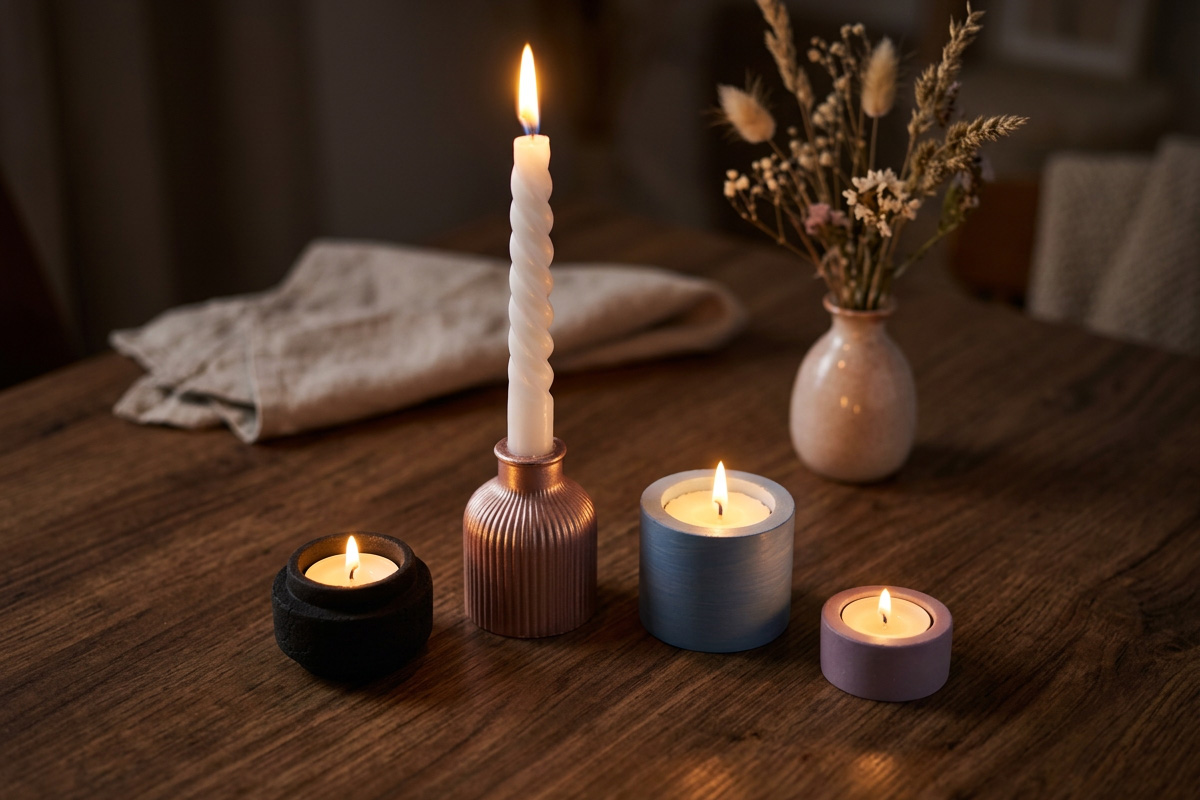
Easiest of the three. Cast a recess sized for a standard metal tealight cup, or drop the cup into a plain well. The metal shell is your insert, so the flame never meets the Jesmonite®.
Best set on a flat holder or a shallow dish with a heat-resistant plate or metal tray under the candle. A wider base gives stability and catches wax.
Use a mould with a narrow bore, then line the bore with a metal candle cup or spike insert. Never let a tapered candle burn down onto the bare surface, and stop the candle well before it reaches the holder.
For stone-look or outdoor-friendly holders, cast in AC730 instead. It’s cement-based with a textured finish, mixes at 1:5 (Jesmonite® liquid to base), demoulds after about 4 hours, and suits both indoor and outdoor use. The water-volume rule above doesn’t apply to AC730, work out quantities with an online Jesmonite® calculation tool or the Jesmonite® app.
Want a working candle without pouring or melting wax? CandleRoxx candle sand makes a candle in seconds: fill any heat-resistant holder with the sand and add a wick. It pairs perfectly with a cast Jesmonite® holder, and because you control how much sand goes in, one pot refills the same piece again and again. Keep the flame clear of any decorative extras, just as you would with a wax candle.
Pick a shape from the candle holder moulds, pair it with an AC100 mix or a starter kit, and you’ll have a handmade holder curing on the bench within the hour. Add an insert, seal it where it won’t meet a flame, and it’s ready to gift or keep.
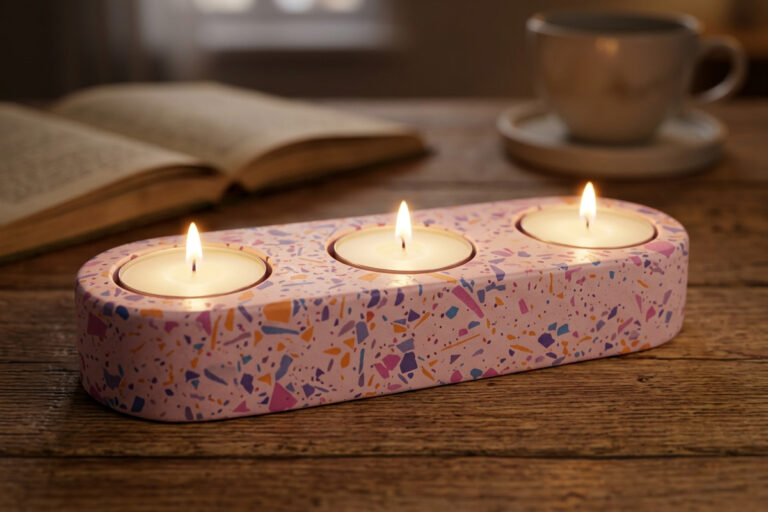
Everything from this guide in one basket: AC100 sets - 1750, with the recommended extras optional.


★★★★★ Rated Excellent on Trustpilot
Cast in AC100 or AC730, the base material is tested to withstand high temperatures and won’t melt. To be safe in use, always place a metal or glass insert under a real flame and keep the flame away from any decorative extras like dried flowers or glitter. Sealers are not fire-tested, so don’t seal a surface the flame could touch.
Sealing isn’t required for a dry tealight holder, but Jesmonite® is porous, so seal it before any contact with water and for any outdoor use. A sealed surface is also easier to wipe clean. Because sealers aren’t fire-tested, leave any surface a flame could reach unsealed. See our guide to sealing Jesmonite® for the method.
For indoor decorative holders, AC100 is the beginner-friendly go-to. For a stone or textured look, or a holder that will live outdoors, choose AC730 and seal it with a penetrating or Flexiguard sealer.
You can demould AC100 after about 30 minutes, but let the piece cure for a full 24 hours before sealing or using it, as it keeps getting stronger during that time.
Lena turns raw casts into pieces you want on your shelf, and pins everything she makes. Part of the Gigacrea maker team.