Nothing here yet. Every maker starts somewhere.
Pick a starter kit with everything for your first cast, or let the beginner guides walk you through it.
Shop the starter kits Read the beginner guides
 By Lena Verhoeven
·
8 min read
Beginner
By Lena Verhoeven
·
8 min read
Beginner
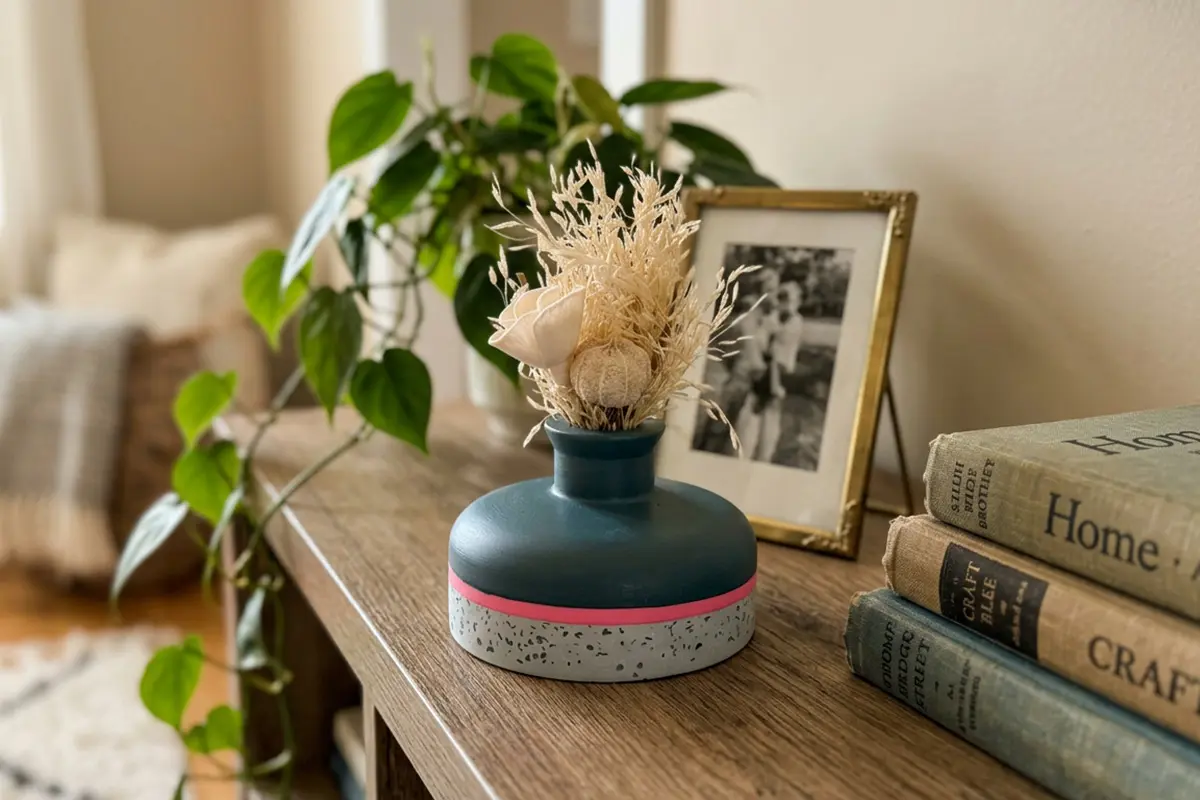
A handmade vase is one of the most satisfying casting projects you can take on, and it looks beautiful whether you fill it with a single dried stem or a full bunch of fresh blooms. In this guide you will learn how to make a Jesmonite® vase from start to finish: how to pick the right mould, how to cast a clean piece, and the one thing most beginners miss, which is how to make it actually hold water. Let’s get into it.
 Jesmonite sealers satin - 50recommended
Small satin sealer, protects against water and daily use
€ 9,99
Add
Jesmonite sealers satin - 50recommended
Small satin sealer, protects against water and daily use
€ 9,99
Add
Not sure how much to mix? Use our free Jesmonite® calculator — enter the water weight of your mould and it gives you the exact liquid and base amounts.
Before you cast anything, decide what kind of flowers you want to display, because it changes how you finish the vase. This is the single most important decision in the whole project.
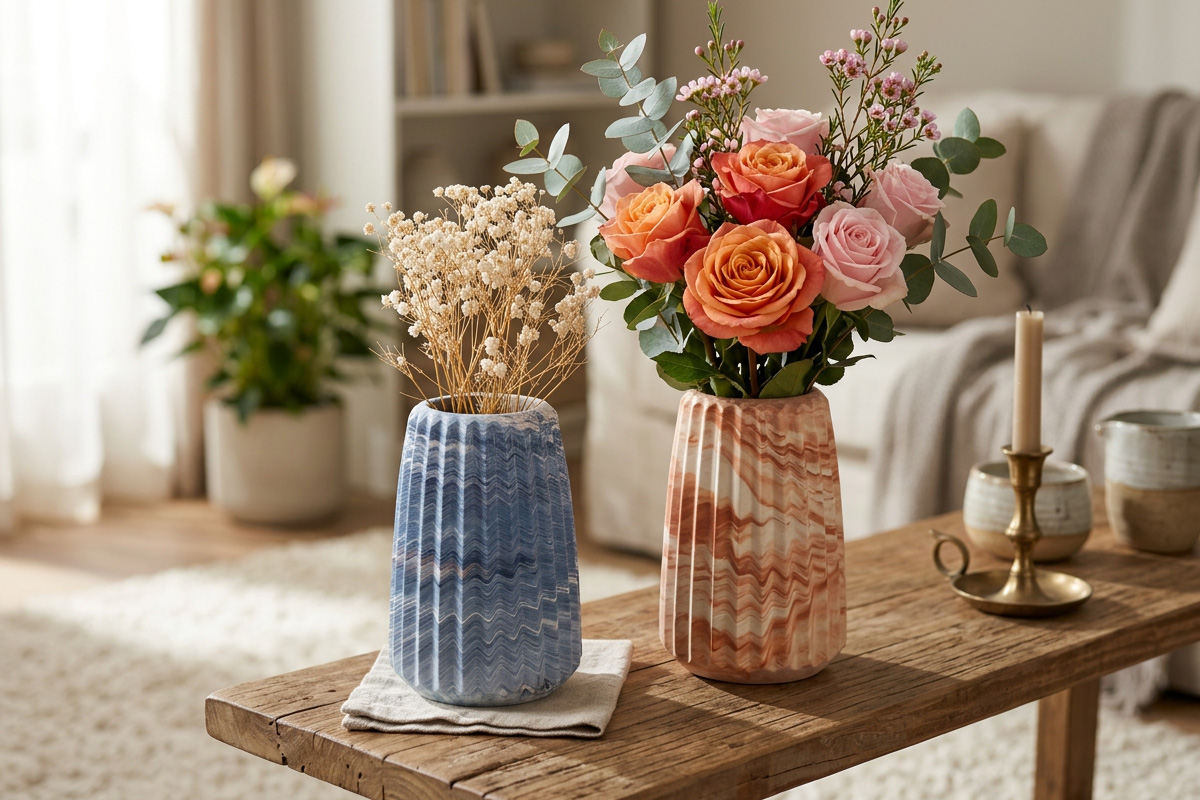
Dried or faux flowers are the easy route. They never touch water, so your vase does not need any waterproofing at all. You can cast it, cure it, and pop your stems straight in. This makes dried arrangements perfect for a first attempt, and they suit the soft, matte, stone-like surface of Jesmonite® beautifully.
Fresh flowers are where you need to plan ahead. Jesmonite® is a mineral-based material and it is naturally porous, which means bare, unsealed Jesmonite® will slowly soak up water and let moisture seep through the walls. Left standing full of water, an unprotected vase can weep, stain the surface, or sit in a damp ring on your furniture. The good news is that this is easy to solve, and we cover two reliable methods further down.
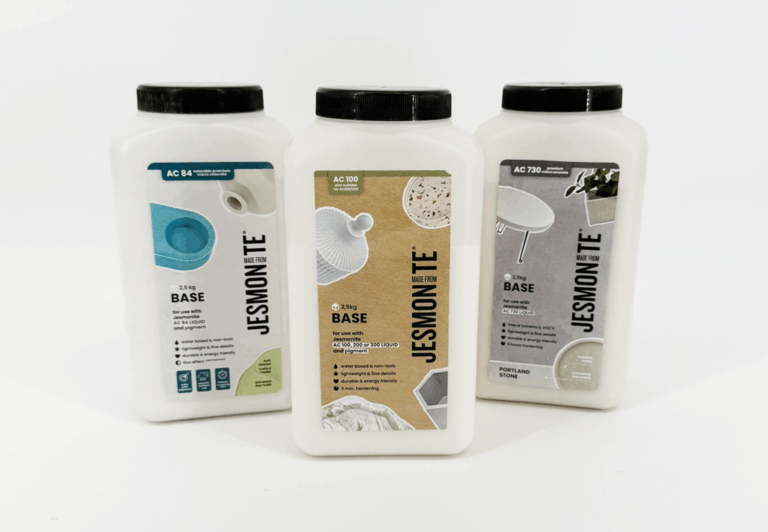
If you are still choosing your material, AC100 is the go-to for indoor decorative homeware like vases. It is beginner-friendly, non-toxic and solvent-free, which makes it a lovely material to work with on the kitchen table.
Your mould shapes everything, so it is worth a moment’s thought. Browse the vase moulds and think about how you will use the finished piece.
Most silicone vase moulds are flexible, which makes demoulding straightforward. If you are weighing up different shapes and finishes, it helps to look at the whole moulds range so you can picture the piece on your shelf before you commit.
Gather everything before you start mixing. AC100 gives you a comfortable working window of about 10 to 15 minutes (a little less if the room is above 25 °C), so having everything to hand means you can pour calmly instead of hunting for a spatula halfway through.
New to casting and want it all in one go? An AC100 starter kit bundles the Jesmonite® base, Jesmonite® liquid and essentials so you can skip the guesswork and start creating.
A simple trick saves waste, and for AC100 you can work it out straight from the mould. Fill your empty mould with water and measure the volume of water it takes to fill it. Add about 10% as spare, since some mix always stays behind in the cup, then divide that figure by 2 to get your Jesmonite® liquid amount. Multiply the Jesmonite® liquid by 2.5 to get your Jesmonite® base amount, because AC100 mixes at a ratio of 1 part Jesmonite® liquid to 2.5 parts base by weight. Many of our own mould product descriptions also list the amount you need, and you can double-check with an online Jesmonite® calculator or the Jesmonite® app. For a full walkthrough, see our guide on how much Jesmonite® you need. Either way, mix a little extra to be safe.
This is the part that decides whether your vase is a dried-flower piece or a proper fresh-flower vase. Because Jesmonite® is porous, an untreated vase should never be left standing full of water. You have two good options.
For a vase you want to use with water and fresh flowers, we recommend sealing it. Make sure the piece is fully cured, then apply an acrylic sealer in satin or gloss, building up even coats to protect the surface from water. Satin keeps the finish close to Jesmonite®’s natural matte look, while gloss adds a subtle sheen. Pay special attention to the inside walls and the base, and follow the coats and drying times on the product. Even well sealed, it is kind to your furniture to stand the vase on a small coaster or felt pad. For the full method, see our guide to sealing Jesmonite®.
If you would rather not seal, keep the water away from the Jesmonite® entirely: drop a slim glass test tube, a plastic tube, or a small jar inside the vase, fill that with water, and arrange your stems in it. The insert holds the water, the Jesmonite® stays dry, and you can lift it out to refill and clean.
Quick rule: dried or faux flowers need no waterproofing at all. Fresh flowers need either an insert or a properly sealed interior. When in doubt, use an insert.
Ready to cast your own? Explore the vase moulds to find your shape, and pair it with an AC100 starter kit so you have everything you need to make your first vase this weekend.
Everything from this guide in one basket: AC100 sets - 1750, with the recommended extras optional.


★★★★★ Rated Excellent on Trustpilot
Yes, but not on its own, because Jesmonite® is porous. Either place a glass or plastic insert inside and fill that with water, or seal the interior thoroughly with an acrylic sealer before use. For dried or faux flowers you do not need to do anything, as no water is involved.
For an indoor decorative vase, AC100 is the natural choice. It is beginner-friendly, non-toxic and made for homeware like vases, trays and candle holders. If you plan to keep the vase outdoors, look at a more weather-suited variant such as AC84 or AC730 instead and seal it with a penetrating or Flexiguard sealer.
Demould after about 30 minutes, then let the piece cure fully for 24 hours before you seal it or use it with water. Dried flowers can go in as soon as it is cured; for fresh flowers, wait until any sealer has fully dried too.
Almost always a mix-ratio problem. Too much Jesmonite® liquid leaves a soft, chalky surface and too little makes the mix thick and fast. Weigh both parts on accurate digital scales and stick to the AC100 ratio of 1 part Jesmonite® liquid to 2.5 parts base by weight, and the next cast should come out firm and smooth.
Lena turns raw casts into pieces you want on your shelf, and pins everything she makes. Part of the Gigacrea maker team.